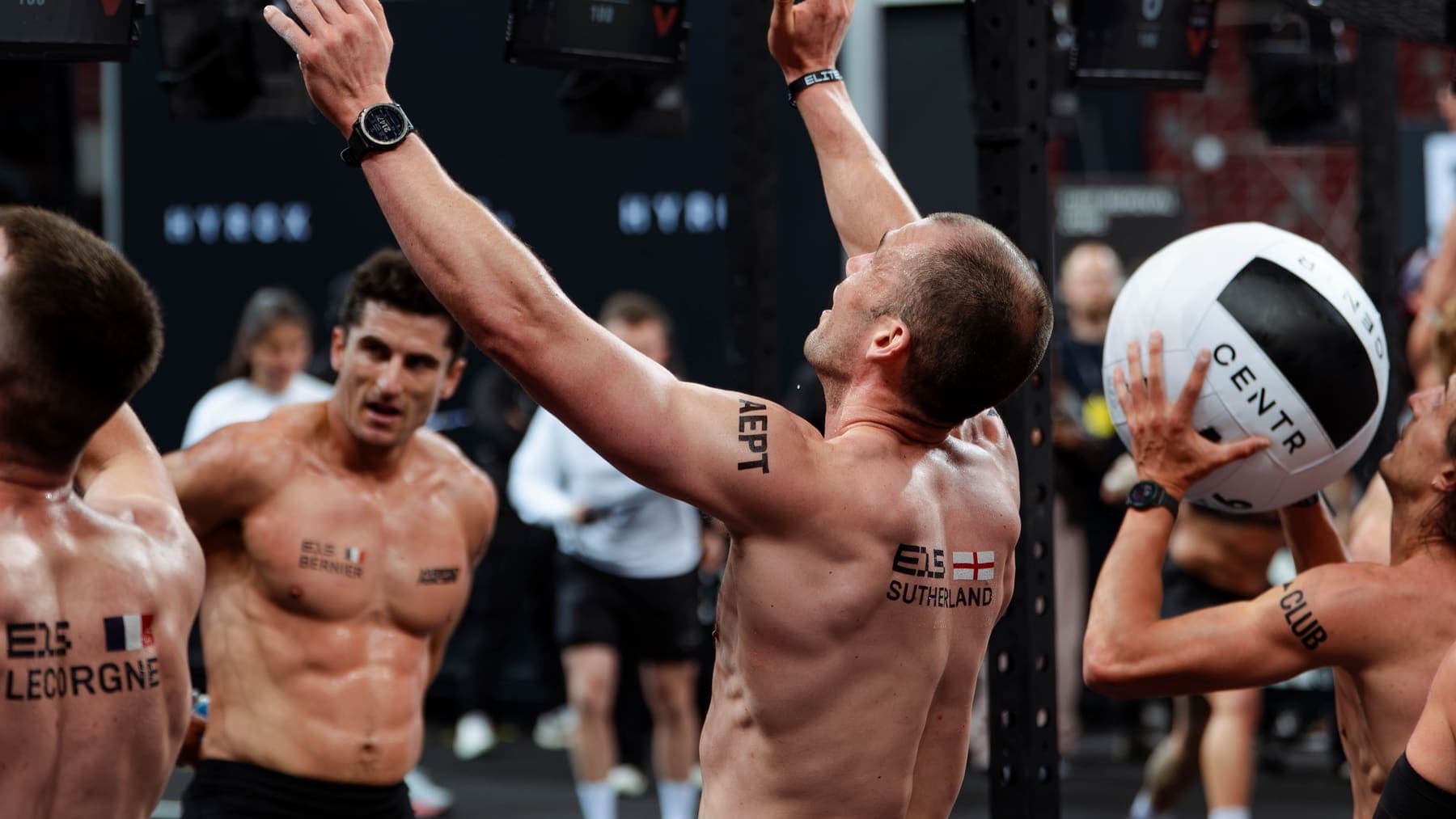
Wall balls are last by design, and that is the whole problem. 100 reps of a squat-and-throw, with a movement standard that must be met on every single one, at the point where you have nothing left and there is no run afterwards to hide in.
The faults here are rarely about wall ball ability. Almost nobody is bad at wall balls when fresh.
Why trust this
The standard below is read from the official 26/27 singles rulebook. Note the rep count: 100 in every division, including Women's Open. That changed from 75 in 25/26 and a great deal of still-live content has it wrong.
The standard, exactly
100 repetitions. Ball weights are 4kg Women's Open, 6kg Men's Open and Women's Pro, 9kg Men's Pro. Targets are 2.70m for both women's divisions and 3.00m for both men's.
- You must start standing tall, hips and knees extended, holding the ball with both hands. It is not permitted to pick the ball up from the ground and immediately throw it.
- Complete a full squat, then throw with both hands so the ball strikes the correct target in the strike zone. That sequence is one repetition.
- After the ball touches the target you either catch it and begin again, or allow it to hit the ground.
Where digital targets are used, the display registers faults, but you must still hit the correct physical target.
The five mistakes
1. Half-squatting when tired. The universal fault, and the one judges call most. Depth quietly disappears somewhere around rep sixty and athletes genuinely do not notice.
The fix: pick a visual cue at the bottom and hit it every rep. Accept that legal reps are slower. A no-rep costs the whole rep.
2. Not starting standing tall. The rulebook is explicit that you cannot scoop the ball from the floor into a throw. Athletes who let the ball drop and then rush the next rep fall into this.
The fix: if you are dropping the ball rather than catching it, stand fully upright with it before initiating the next rep.
3. Big sets. Sets of twenty-five feel efficient and produce a collapse. The failure in wall balls is sudden, not gradual: you go from fine to unable in about three reps.
The fix: small sets from rep one, before you need them. Ten and five, with a five-second reset, beats twenty-five and ninety seconds of standing around.
4. Missing the strike zone. Height alone is not enough; the ball has to hit the correct target properly. Tired throws drift.
The fix: aim deliberately rather than throwing upward and hoping. If your throws are drifting, your legs are gone and the sets need to be smaller.
5. Catching too high. Receiving the ball with straight arms above the head and then absorbing it costs shoulder strength you do not have left.
The fix: catch it into the squat, letting the descent absorb the ball. Or let it drop and reset if you are past that point.
Why this station is not about wall balls
If your wall balls fall apart, the cause is almost always the seven stations before them. The sled push at station two, the burpees at four, the lunges at seven. Wall balls are where the bill arrives.
That has a practical consequence: training wall balls fresh, in isolation, improves the wrong thing. You need them at the end of sessions, tired, in the state the race will present them.
The faults at a glance
| Fault | Costs you | Fix | |---|---|---| | Half-squatting when tired | The rep | Pick a visual depth cue, hit it | | Not starting standing tall | The rep, per the rulebook | Stand fully upright before each rep | | Sets of twenty-five | A sudden collapse around rep 60 | Small sets from rep one | | Missing the strike zone | The rep | Aim deliberately, shrink the sets | | Catching too high | Shoulders you have not got left | Catch into the squat, or let it drop |
The practical part: three sessions
- Volume, tired. 100 reps for time at race weight to race target height, at the end of a session. Record the time and repeat monthly.
- Broken sets under fatigue. 5 rounds: 20 wall balls, 200m run. Learn what set size you can actually hold when breathing hard.
- The full back half. 1km run, 100m lunges, 1km run, 100 wall balls. Brutal, and the most honest rehearsal of what the last fifteen minutes feels like.
Honest limitations
Ball sizing and wall surfaces vary slightly by venue, and a ball that has gone soft handles differently. Target heights do not vary, including by age.
Height matters here in a way it does not elsewhere: taller athletes have less distance to throw, and that is a genuine structural advantage nobody can train away.
If you have a shoulder or knee history, 100 reps of a loaded squat-to-throw is worth a professional opinion.
Next step
For the full weight and target table by division, see station weights explained.
The fitness assessment quiz will tell you whether wall balls are your limiter or your pacing is.
Source: rep counts, ball weights, target heights and the standing-tall start requirement from the official HYROX singles rulebook, season 26/27.
Related
[ FAQ ]
Frequently asked
How many wall balls are in a HYROX?
100 reps in every division under the 26/27 rulebook, including Women's Open. The count was 75 for Women's Open during the 25/26 season, which is why a lot of older content still says 75.
What is the wall ball standard in HYROX?
Start standing tall with hips and knees extended, holding the ball in both hands. Complete a full squat, then throw with both hands so the ball strikes the correct target in the strike zone. You may not pick the ball off the ground and immediately throw it.
How should you break up 100 wall balls?
Into small sets from the first rep. Sets of ten with a short reset almost always beat sets of twenty-five followed by a long recovery, because the failure is sudden rather than gradual.
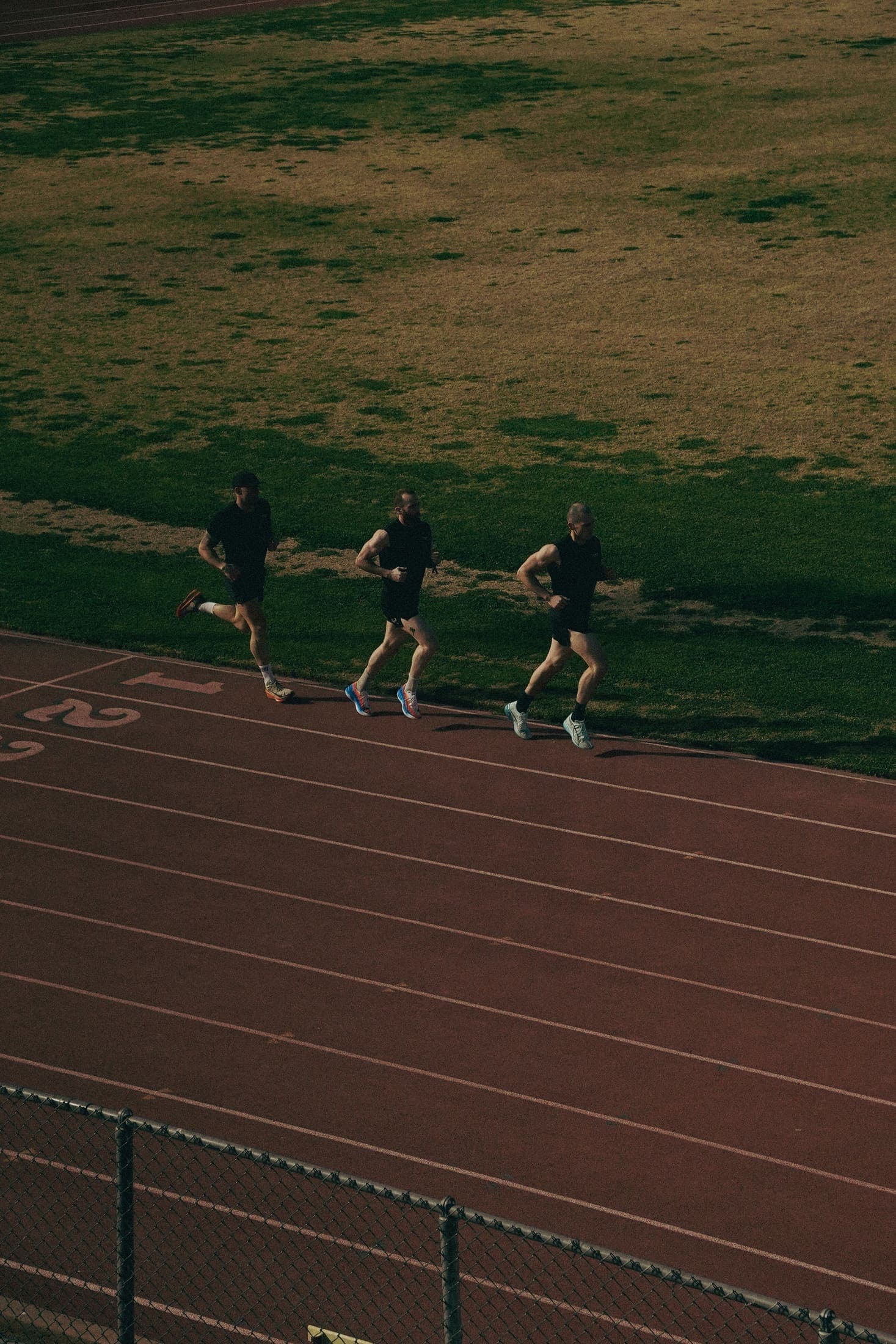
Written by
The Suth Performance teamCoaches and editors
The Suth Performance programming team, led by HYROX Elite 15 athlete Ben Sutherland. They write the training, technique and race-day guides on this site, and Ben reviews every one before it is published.
[ KEEP READING ]
Related guides
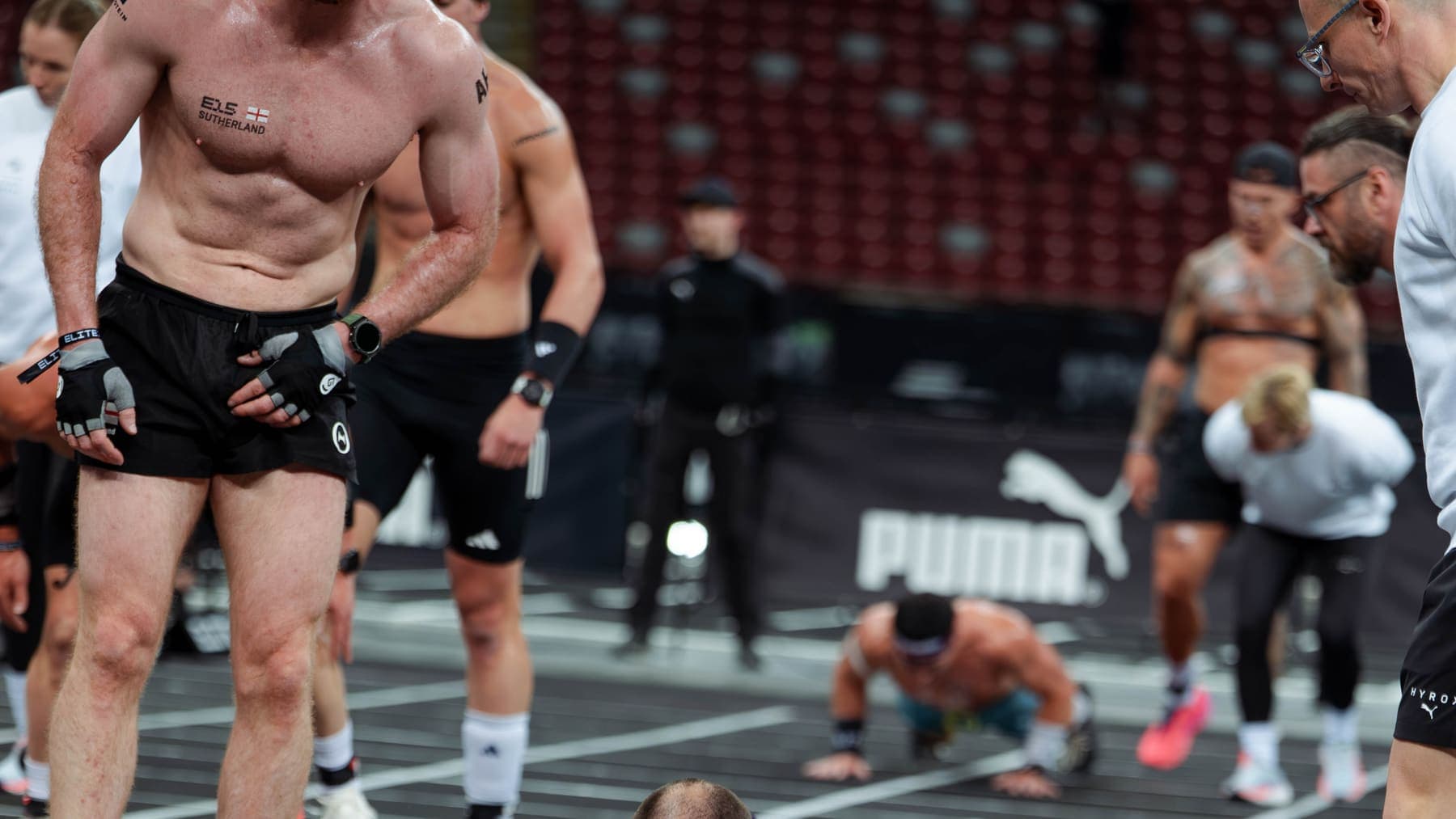
Technique
Burpee broad jump mistakes: what's costing you 60 seconds
There is no minimum jump distance, which changes the whole strategy. Five faults, the 5cm rule almost nobody knows, and why long jumps are usually the wrong answer.

Technique
Farmers carry mistakes: what's costing you 60 seconds
Putting the bells down is the obvious mistake. The expensive ones are training grip fresh, not counting your laps, and losing the box on the way back in.
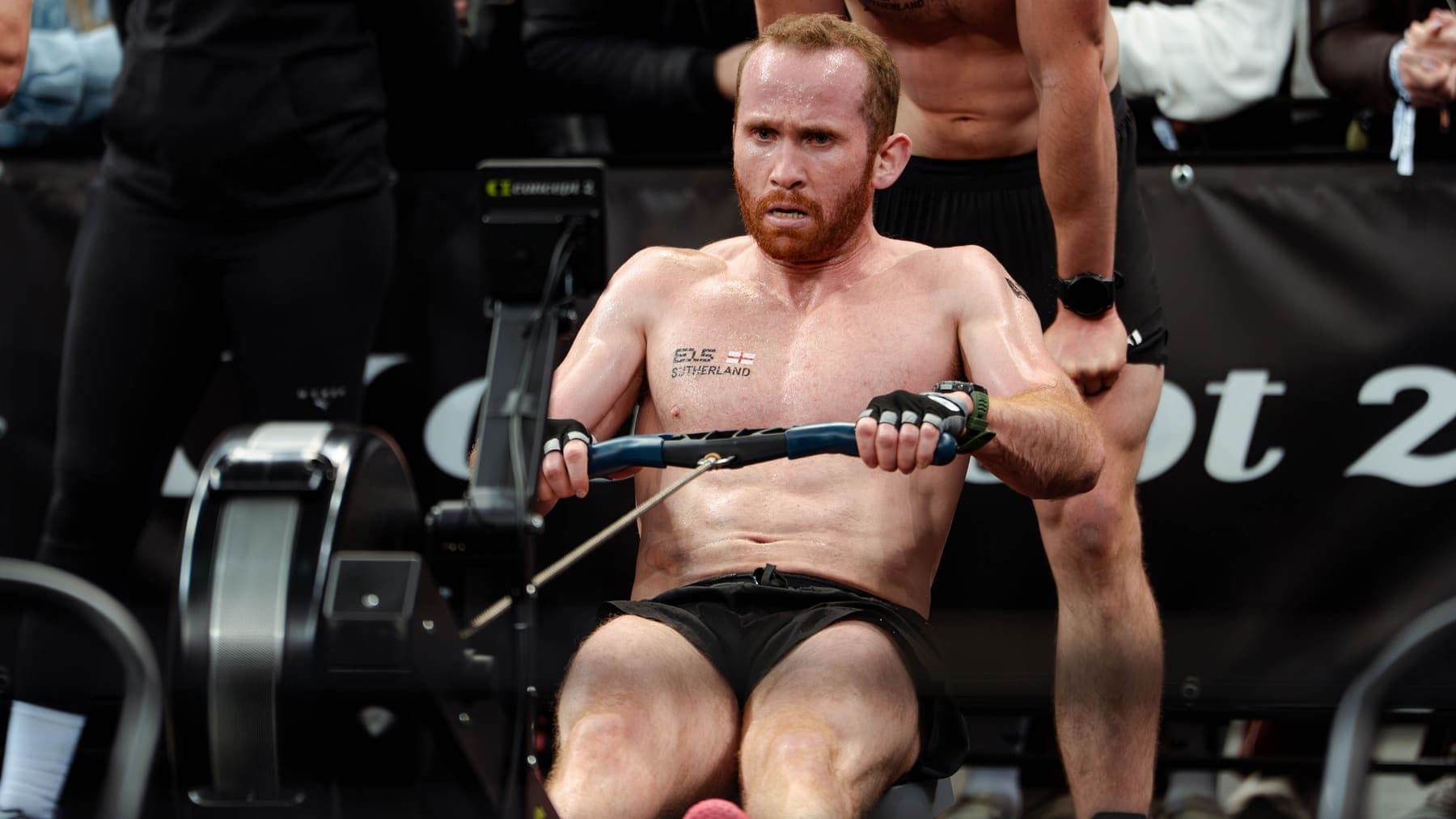
Technique
Rowing mistakes: what's costing you 60 seconds
The row is the only genuine recovery in a HYROX, and most people spend it digging a deeper hole. Five faults, plus the rule that lets you rest mid-station without penalty.