
Sandbag lunges land at station seven, when your quads have already absorbed the sled push, the burpees and 6km of running. It is the station where races quietly come apart, and the weight is rarely the reason.
Why trust this
Loads and the movement standard are read from the official 26/27 singles rulebook, including two rules that regularly cost people time without their realising.
The standard, exactly
100 metres. Loads are 10kg Women's Open, 20kg Men's Open and Women's Pro, 30kg Men's Pro.
Two rules worth knowing precisely:
- The bag must remain fully supported by the working athlete. It must not be placed on the ground, barricades, your feet or any other surface to remove the load. Each infringement is a 15-second penalty.
- You do not need to lunge around the turning points at the end of each lane. You do have to restart each working section with two feet behind the white line and lunge across it.
- The station is complete once your leading foot completely crosses the finish line, and you must then return the sandbag to the correct marked area. Failing to do so is a 30-second penalty, avoidable if corrected before you leave the Roxzone.
The five mistakes
1. Resting the bag illegally. Tired athletes shrug the bag onto a barricade or let it sit on a raised knee to unload the shoulders. Each time is 15 seconds, and it is one of the most commonly called infringements at this station.
The fix: if you need a rest, stand still holding it. Standing under load is legal. Offloading it is not.
2. Not knowing you can walk the turns. Athletes lunge around the turning points because they assume they must, spending energy the rules never asked for.
The fix: walk the turns. Restart each section with two feet behind the line and lunge across it.
3. Short, choppy lunges. Small steps mean more reps for the same distance, and every rep is a full descent and drive. Over 100m that compounds badly.
The fix: a longer step covers more ground per rep. Not so long that you cannot stand up out of it, but longer than the panicked shuffle fatigue produces.
4. Letting the bag slip forward. A bag that creeps down towards your neck or forward off the shoulders pulls you into flexion, which makes standing up from each lunge harder and hurts your lower back.
The fix: set it high across the shoulders and re-set it deliberately when it moves, standing still rather than fighting it mid-rep.
5. Going too early. Athletes who reach station seven having paced the first six well can push here. Athletes who have not, cannot, and trying produces a stall halfway down the lane.
The fix: the lunges are a consequence station. If they feel impossible, the error was at the sled push, not here.
What actually makes this station hard
Not the weight. 10kg or 20kg is modest in isolation. It is 100m of single-leg work with a load, at the point where your quads have nothing, and there is no way to make it easier on the day.
That means the preparation is exposure: lunging distance under load, repeatedly, when already tired. There is no technical trick that substitutes for it.
The faults at a glance
| Fault | Costs you | Fix | |---|---|---| | Resting the bag on anything | 15 seconds, each time | Stand still holding it instead | | Lunging the turns | Energy the rules never asked for | Walk the turns, lunge across the line | | Short choppy lunges | More reps for the same 100m | Longer step you can still stand out of | | Bag slipping forward | Pulls you into flexion | Re-set it standing still | | Going too early | A stall mid-lane | This is a consequence station |
The practical part: three sessions
- Distance tolerance. 5 rounds: 20m walking lunges at race weight, 200m easy jog. Building the specific tissue tolerance.
- Full station. 3 x 100m at race weight, 2 minutes rest. Note the time each round; the drop-off tells you where your endurance ends.
- The race position. 3 x (1km run, then 100m lunges). Station seven arrives on tired legs and this is the only way to rehearse that.
Do not train these heavier than race weight. The bag is not the challenge; distance under fatigue is. Add metres, not kilos.
Honest limitations
Sandbag shape and filling vary between venues, and a bag that has settled unevenly genuinely is harder to carry. You cannot train for that specifically.
If you have a knee or lower back history, loaded walking lunges at volume are worth a professional conversation before you build a block around them.
Next step
For how the earlier stations set this one up, see station order.
The fitness assessment quiz will tell you whether the lunges are your limiter or a symptom of pacing.
Source: loads, the support rule, turning points and marked-area requirement from the official HYROX singles rulebook, season 26/27.
Related
[ FAQ ]
Frequently asked
Can you rest the sandbag on the ground during HYROX lunges?
No. The bag must remain fully supported by the working athlete. Placing it on the ground, barricades, your feet or any other surface to remove the load is a 15-second penalty for each infringement.
Do you have to lunge around the turning points?
No. The rulebook does not require you to lunge around the turns at the end of each lane. You do have to restart each working section with two feet behind the white line and lunge across it.
How heavy is the HYROX sandbag lunge?
10kg in Women's Open, 20kg in Men's Open and Women's Pro, 30kg in Men's Pro, over 100m.

Written by
The Suth Performance teamCoaches and editors
The Suth Performance programming team, led by HYROX Elite 15 athlete Ben Sutherland. They write the training, technique and race-day guides on this site, and Ben reviews every one before it is published.
[ KEEP READING ]
Related guides
Technique
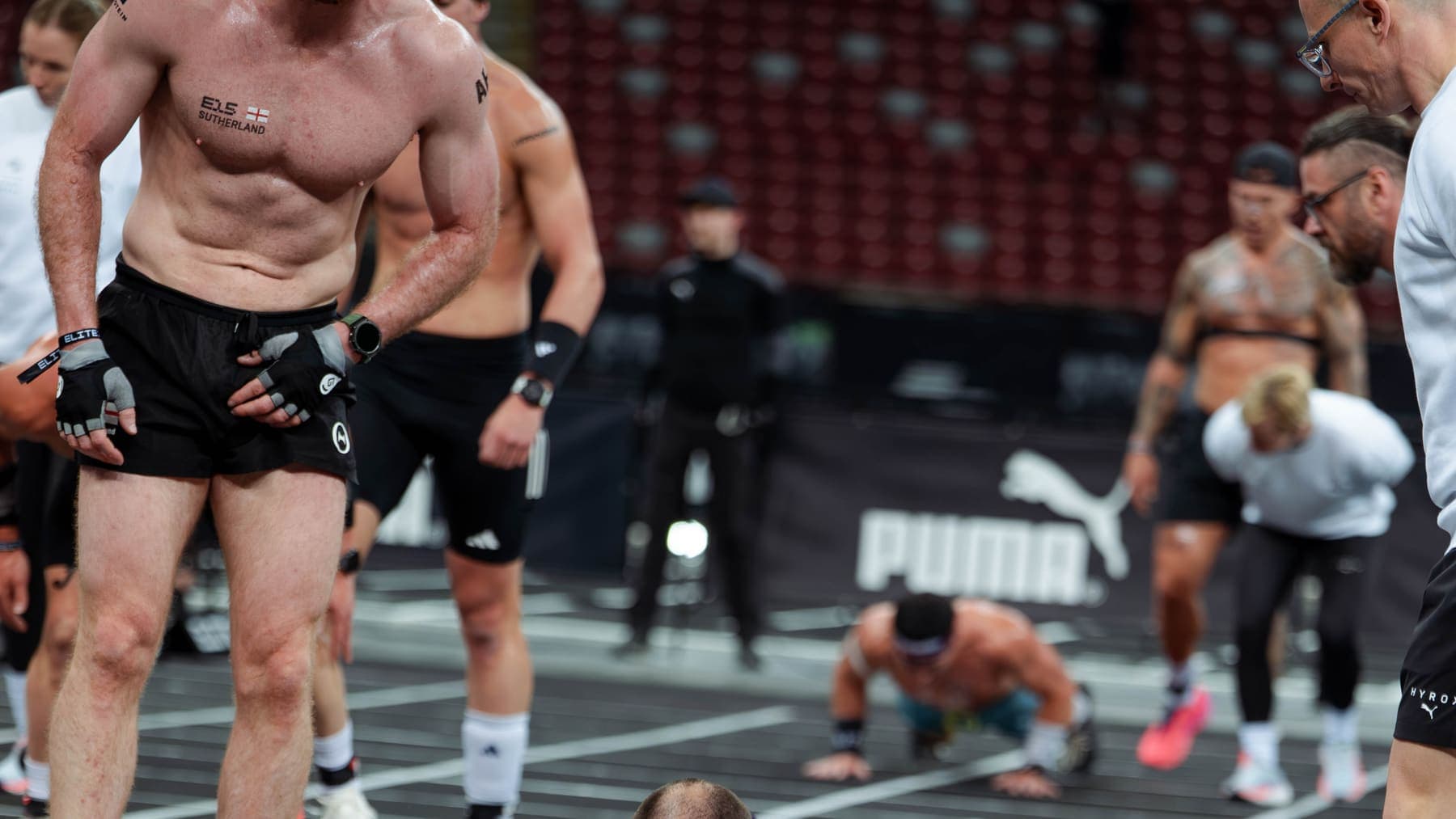
Burpee broad jump mistakes: what's costing you 60 seconds
There is no minimum jump distance, which changes the whole strategy. Five faults, the 5cm rule almost nobody knows, and why long jumps are usually the wrong answer.

Technique
Farmers carry mistakes: what's costing you 60 seconds
Putting the bells down is the obvious mistake. The expensive ones are training grip fresh, not counting your laps, and losing the box on the way back in.
Technique
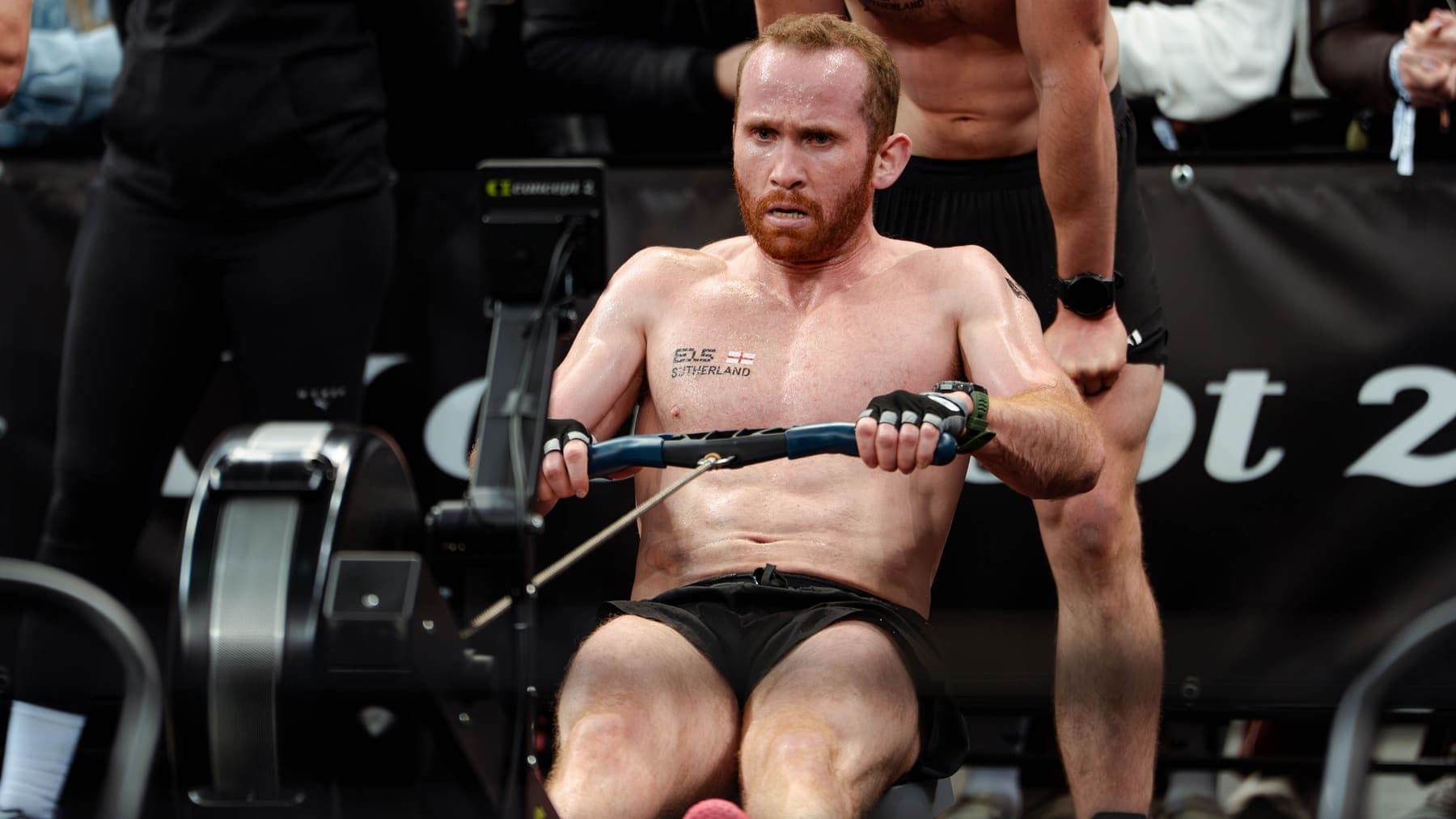
Rowing mistakes: what's costing you 60 seconds
The row is the only genuine recovery in a HYROX, and most people spend it digging a deeper hole. Five faults, plus the rule that lets you rest mid-station without penalty.