
The SkiErg costs most people time twice: once on the machine, and again three stations later. It arrives first, after a single kilometre, when you feel fresh and the adrenaline is still up. That combination produces the single most common race-wrecking decision in HYROX, which is going too hard at station one.
Why trust this
The movement standard below is read from the official 26/27 singles rulebook. Ben Sutherland races Pro Doubles on the Elite 15 start list, where the SkiErg is treated as a pacing problem rather than a strength one.
The standard, exactly
1,000 metres. The monitor is reset by a judge before you start.
Both feet must be on the SkiErg platform at all times. Lifting the feet during the movement is allowed, and a dynamic or jumping motion is permitted. Your heels may hang over the edge of the base. But if either foot touches the floor rather than the baseplate during the 1,000m, that is an infringement.
Penalties follow the standard ladder: formal warning, then 15 seconds, then a further 15 seconds for each subsequent infringement with no more warnings.
The five mistakes
1. Pulling with the arms. The most common fault by a distance. The SkiErg is driven by the trunk and the lats, with the arms as the connection rather than the engine. Arm-dominant pulling feels quick, produces less power per stroke, and empties your shoulders before you reach the sled push.
The fix: start each stroke by hinging at the hips with a tall chest, and think about driving your elbows down past your ribs rather than pulling the handles apart.
2. Racing station one. You have run 1km. You feel strong. You are not strong, you are fresh, and those are different. A fast SkiErg split bought with a spiked heart rate is paid for on runs three, four and five.
The fix: pick a target split before the race and hold it even when it feels easy. If you finish the SkiErg thinking you could have gone harder, you paced it correctly.
3. Short, frantic strokes. High stroke rate with a shallow range feels urgent and moves the metres slowly. Length is what produces distance per stroke.
The fix: reach tall at the top, finish past the hips at the bottom, and let the rate settle where it wants to. Fewer, longer strokes beat more, shorter ones.
4. Standing too upright. No hip hinge means the trunk contributes nothing and the arms do everything. This is fault one with a different cause.
The fix: the movement should look like a hinge, not a pull-down. Hips travel back, chest stays proud.
5. Feet drifting off the baseplate. Athletes using a dynamic or jumping style sometimes land partly off the plate late in the effort when they tire. That is an infringement, and it is entirely avoidable.
The fix: if you jump, keep the movement small and controlled as you fatigue. If you are not confident of landing on the plate every time, do not jump at all.
The fault that is not on the machine
Your SkiErg split is not the number that matters. What matters is your heart rate walking into the Roxzone afterwards, because the sled push is next and the sled push is where first races end.
If you leave the SkiErg breathing hard, you have already lost more time than any stroke correction could recover.
The faults at a glance
| Fault | Costs you | Fix | |---|---|---| | Arm-only pulling | Power per stroke, shoulders before the sled | Hinge and drive elbows past ribs | | Racing station one | Minutes on runs 3-5 | Pick a split, hold it, finish feeling easy | | Short frantic strokes | Distance per stroke | Reach tall, finish past the hips | | Standing upright | Trunk contribution | Hips back, chest proud | | Feet off the baseplate | 15s penalty and up | Keep any jump small as you tire |
The practical part: three sessions that fix it
- Technique at low intensity. 5 x 250m at an easy pace, focusing entirely on hinge and stroke length. You are learning a position, not building fitness.
- Race-split holds. 4 x 500m at your target 1,000m pace with 90 seconds rest. Learn what that pace feels like so you can hold it when adrenaline lies to you.
- The one that matters. 4 x (1,000m SkiErg, then 1km run at goal pace). This teaches you what SkiErg effort you can afford, which is the actual question.
Honest limitations
Technique on the SkiErg is worth seconds. Pacing it correctly is worth minutes, and those minutes appear later in the race rather than on this station.
If you have a shoulder or lower back history, the hinge-dominant pattern is worth checking with a professional rather than self-diagnosing from a page.
Next step
For the whole sequence and what each station does to the next, see station order.
The fitness assessment quiz will tell you whether the SkiErg is genuinely your limiter or whether your running is.
Source: movement standard and penalty protocol from the official HYROX singles rulebook, season 26/27.
Related
[ FAQ ]
Frequently asked
What is the most common SkiErg mistake in HYROX?
Pulling with the arms instead of driving with the trunk and lats. It feels faster, produces less power per stroke, and empties your shoulders before the sled push at station two.
Can you lift your feet on the SkiErg in HYROX?
Yes. Lifting the feet during the exercise is allowed and a dynamic or jumping motion is permitted. Your feet may leave the base plate, but they must land back on it. If either foot touches the floor rather than the baseplate during the 1,000m, that is an infringement.
How hard should you go on the SkiErg?
Deliberately controlled. It is station one of eight, arriving after only 1km of running when adrenaline is hiding your true effort. A SkiErg split you are proud of usually means a slower finish.

Written by
The Suth Performance teamCoaches and editors
The Suth Performance programming team, led by HYROX Elite 15 athlete Ben Sutherland. They write the training, technique and race-day guides on this site, and Ben reviews every one before it is published.
[ KEEP READING ]
Related guides

Technique
Burpee broad jump mistakes: what's costing you 60 seconds
There is no minimum jump distance, which changes the whole strategy. Five faults, the 5cm rule almost nobody knows, and why long jumps are usually the wrong answer.

Technique
Farmers carry mistakes: what's costing you 60 seconds
Putting the bells down is the obvious mistake. The expensive ones are training grip fresh, not counting your laps, and losing the box on the way back in.
Technique
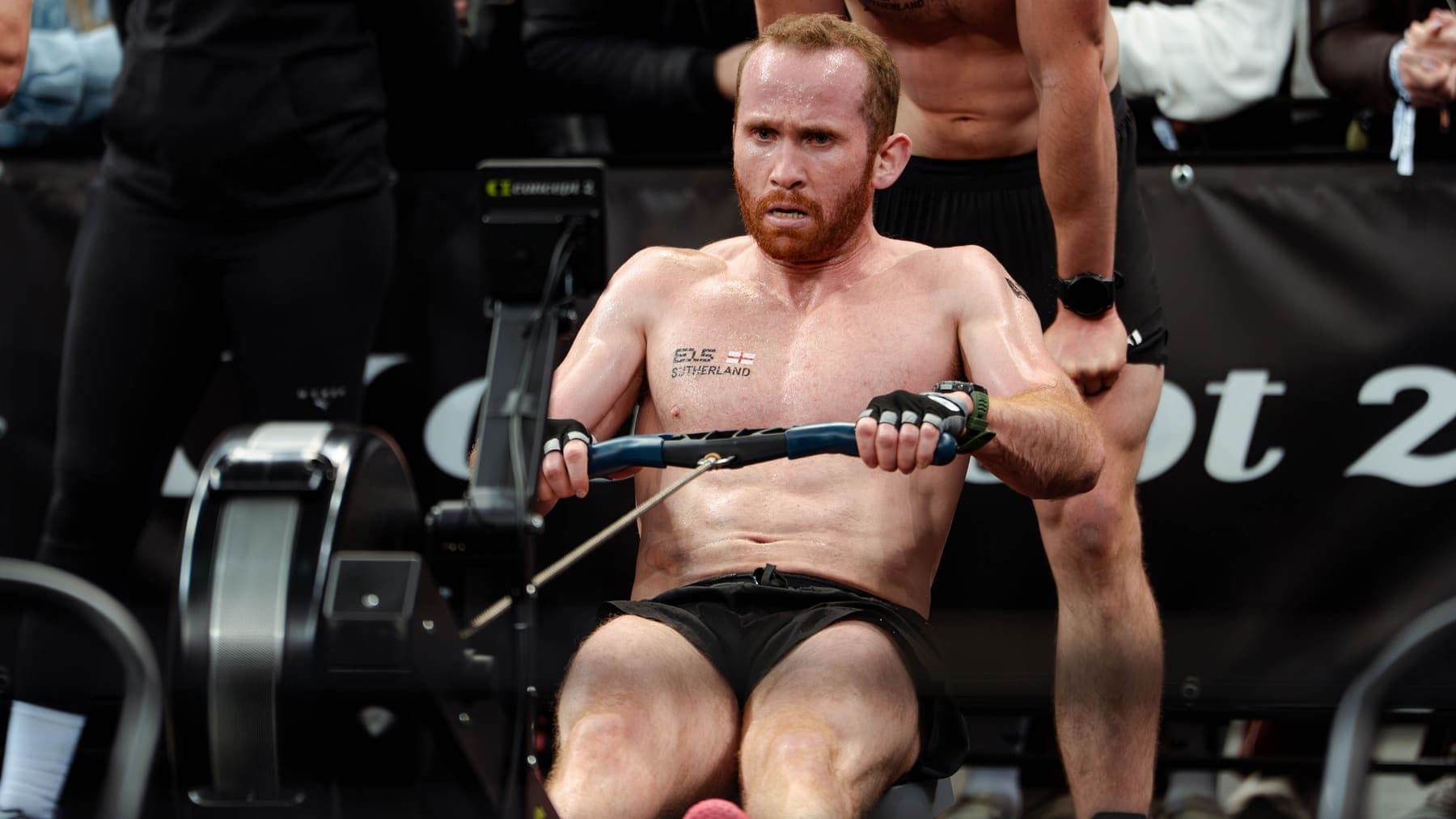
Rowing mistakes: what's costing you 60 seconds
The row is the only genuine recovery in a HYROX, and most people spend it digging a deeper hole. Five faults, plus the rule that lets you rest mid-station without penalty.