This page is about what to wear. For what to buy, see the beginner kit list. For what goes in the bag, see the race day bag. For the shoe question in depth, see choosing HYROX trainers.
A clear race-day kit list saves stress and time. This is what experienced Hyrox athletes pack, what's worth investing in, and what the marketing departments would like you to buy but won't help your race.
The essential checklist
What you cannot race without:
- Hyrox-compatible shoes. Cross-trainers, not running shoes.
- Shorts or leggings. Whatever you train in.
- Top. T-shirt or vest.
- Sports bra (for women). High-support; you'll be jumping and lifting.
- Race bib + chip. Issued at registration.
- ID + entry confirmation. Have both physical and phone copies.
- Water bottle. Most events have water stations but a 500 ml bottle for the warm-up.
| Item | Note | |---|---| | Hyrox-compatible shoes | Cross-trainers, not running shoes | | Shorts or leggings | Whatever you train in | | Top | T-shirt or vest | | Sports bra (where relevant) | High support: you will be running and jumping | | Race bib and chip | Issued at registration | | ID and entry confirmation | Carry both a physical and a phone copy | | Water bottle | 500ml, mainly for the warm-up |
That's the floor. You can race Hyrox with just this.
The shoes question
Shoes matter most. Three categories, in order of suitability:
1. Cross-trainers (best). Built for mixed activities. Moderate cushion, lateral stability, flat or low heel-toe drop.
Recommended: Reebok Nano X4, Nike Metcon 9, Inov-8 F-Lite G 300, NoBull Trainer, Born Primitive Savage 1.
2. Trail / hybrid runners (acceptable). More cushion than cross-trainers, slightly less lateral support. Work fine for the running but feel less stable on the sled.
Recommended: Nike Wildhorse, Inov-8 TrailFly, Salomon Speedcross (only on dry surfaces).
3. Pure running shoes (avoid). Maximum cushion, narrow lateral base. Great for marathons. Bad for sled pushes.
What to avoid:
- Weightlifting shoes (elevated heel kills the running)
- Minimalist barefoot shoes (no cushion for 8 km)
- Brand new shoes you haven't trained in (blisters guaranteed)
What to wear
The weather inside a Hyrox arena is warmer than outside. Even in winter, the arena temperature climbs into the low 20s C with thousands of athletes producing heat. Dress for warmer than the outdoor temperature.
Bottoms:
- Shorts (preferred): light fabric, mid-length, no zip pockets.
- Leggings (acceptable): if you train in them. Tight-fit so the bag and sandbag don't catch.
- Avoid loose tracksuit bottoms; they catch on equipment.
Tops:
- T-shirt or vest, breathable fabric.
- Sports bra (women): high-support, ideally racerback. The wall ball + run combo punishes low-support bras.
- Avoid cotton; gets heavy with sweat.
Accessories:
- Headband or hair tie. Hair in eyes during wall ball is a known issue.
- Wristbands (optional). Some athletes like to wipe sweat between stations.
What goes in the bag
Everything above is what you wear. What you carry is a separate job, and it is the one people get wrong the night before: dry clothes, food, the four things everyone forgets, and the kit that is not worth the space.
That list lives in its own post, tickable: the Hyrox race day bag.
Optional kit (the "if it helps" list)
These are nice-to-have but won't change your race:
- Foam roller or massage ball. For the post-race car or train.
- Compression socks / sleeves. Marginal performance benefit, decent recovery aid.
- Caffeine tablets or pre-workout drink. Tested in training.
- Energy gel (single). For mid-race if you're worried about fuelling.
- Light gloves. For the sled pull rope grip.
What NOT to bring
Two separate lists, because one is our opinion and one is the rulebook.
Banned by the rulebook. Section 10.1 works by permission, not prohibition: knee sleeves, gloves, a weightlifting belt, wristbands, hydration packs and prescribed inhalers or respiratory devices are allowed, and anything not on that list is prohibited by default. So:
- Headphones. Explicitly forbidden, along with phones, ear plugs, body cameras and smart glasses.
- Lifting straps. Not on the permitted list, so not allowed anywhere, not just at the farmers carry.
- Grips. The list says "gloves [not grips]". Gloves are fine, gymnastics grips are not.
- Your own chalk. Event chalk only, and only at the sled pull and farmers carry. Two minutes otherwise.
One rule that catches people out: anything you do use has to be carried from start to finish. You cannot hand a belt or a hydration pack to someone, or take one from them mid-race. That is outside assistance, and it is a disqualification risk rather than a time penalty.
Our opinion, not a rule.
- Heart rate monitor / watch. Permitted. You just won't have time to look at it during stations.
- Lifting belt. Permitted. None of the HYROX loads need one, and it restricts breathing.
- Bulky jacket / hoodie. Wear something easy to drop at the bag-check.
Pre-race day prep
The night before:
- Lay out the kit. Everything you'll wear, in the order you'll put it on.
- Pack the bag. Recovery kit, food, water, valuables.
- Pin the race bib to your top. Now, not in the morning when you're stressed.
- Charge the phone.
- Set 2 alarms.
The morning:
- Eat 2-3 hours before race start. Real meal, low fibre.
- Arrive 60-75 minutes before race start. Time for warm-up + bag-check + bathroom.
- Bathroom one final time 15 minutes before lining up.
Warm-up kit
A separate warm-up outfit isn't necessary but useful in cold months:
- Light jacket to wear during pre-race warm-up. Removed before the start.
- Beanie/buff if outdoors briefly.
You can put these in the bag-check area before the race starts.
What happens at registration
Most events:
- Show ID + entry email.
- Receive bib + chip (one or both).
- Receive bag-check bracelet.
- Bag-check your stuff before the race.
Allow 20-30 minutes for registration. Arrive 90 minutes early if it's your first time so you're not stressed.
Race-day common mistakes
- Wearing new shoes. Blister city. Race in shoes you've trained in for at least 4 weeks.
- Eating something new for breakfast. GI upset 30 minutes in. Stick to what you've tested.
- Underdressing because it's cold outside. Arena gets hot. You'll overheat.
- Forgetting the bib pinning. They check at the start line.
- Not refilling the water bottle. Aid stations are crowded; carry your own.
Post-race
Within 60 minutes:
- Carbohydrate + protein. Recovery shake, sandwich, banana.
- Water. 500-1000 ml with electrolytes.
- Dry change of clothes. The post-race chill is real.
Within 6 hours:
- Real meal. Steak, rice, vegetables.
- 30 minutes easy walking. Helps drain lactate.
Within 24 hours:
- Full rest day.
- 9+ hours sleep.
The honest summary
Hyrox doesn't require a £500 kit haul. Decent cross-trainers (£100-150), shorts and a top you already own, a high-support sports bra (£40-60), and you're set.
Test everything in training. Don't experiment on race day. The kit you pack the night before is the kit that gives you a stress-free race morning.
The race is decided by your training. The kit just keeps you comfortable enough to use it.
Next step
Kit is the easy part of race week. The HYROX training plans handle the twelve weeks before it, counting back from your race date.
If you have not picked a race yet, the fitness assessment quiz tells you how much time you need.
[ FAQ ]
Frequently asked
What shoes are best for Hyrox?
Cross-training shoes with moderate cushion and lateral stability. Reebok Nano, Nike Metcon, Inov-8 F-Lite, or NoBull Trainer are popular. Pure running shoes lack lateral support for the sled work; weightlifting shoes lack cushion for the 8 km of running.
Do I need compression socks?
No. Optional. Some athletes feel better wearing them; the performance benefit is marginal. If you train in them, race in them. Don't experiment on race day.
What should I wear on top?
Lightweight, breathable, no zips. T-shirts or vests work. Avoid heavy cotton (gets wet and heavy with sweat) and anything with metal zips that could scrape during the sled push.
Do I need gloves?
Optional. Most athletes go barehanded. Light grip-friendly gloves (like wod gloves) help on the sled pull rope. Don't wear full lifting gloves; they reduce ski erg handle grip.
Written by
The Suth Performance teamCoaches and editors
The Suth Performance programming team, led by HYROX Elite 15 athlete Ben Sutherland. They write the training, technique and race-day guides on this site, and Ben reviews every one before it is published.
[ KEEP READING ]
Related guides
Race day
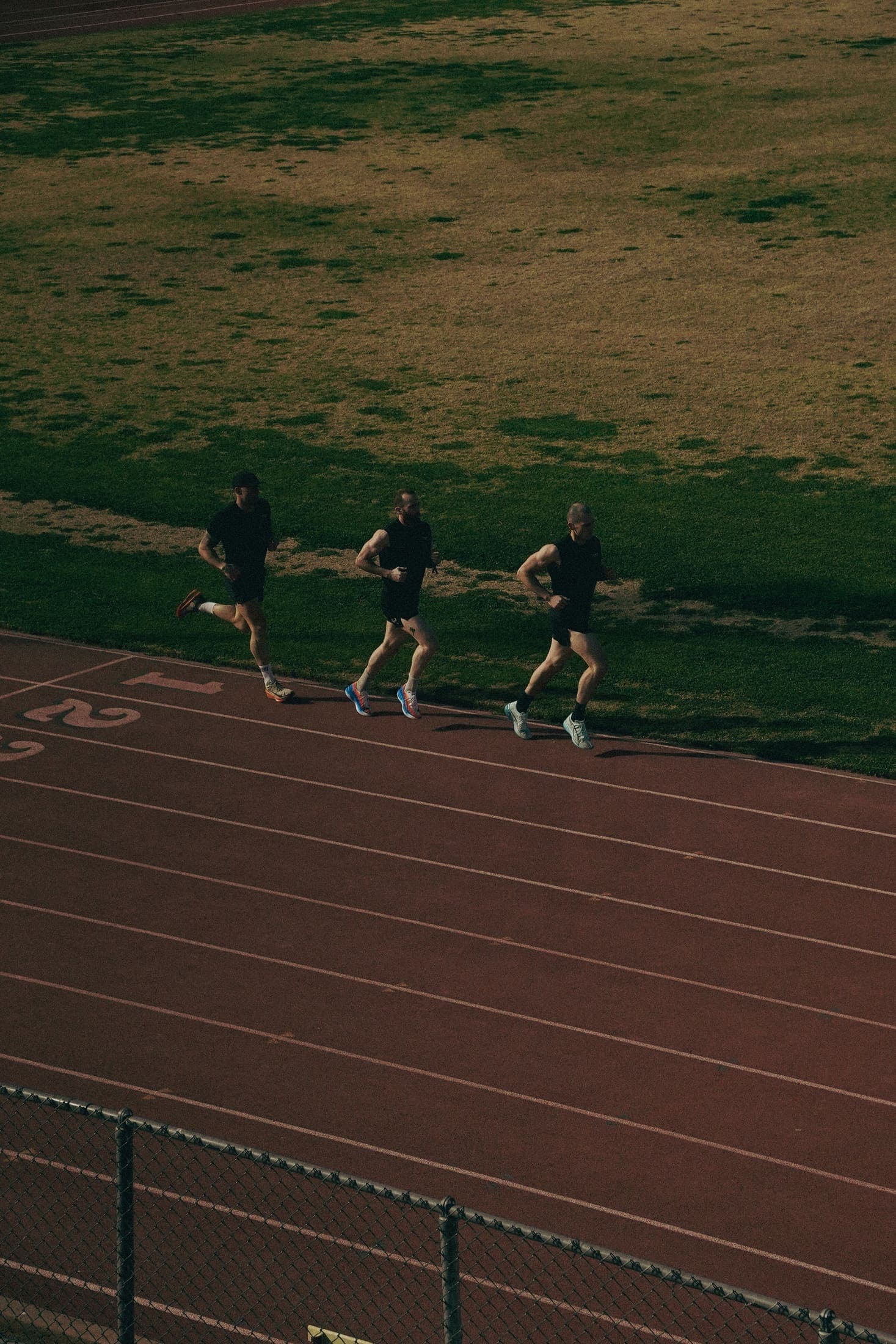
HYROX trainers: how to choose, and what the race actually demands
One pair has to run 8km and push a loaded sled. Those two jobs want opposite shoes, and every HYROX trainer is a compromise between them. Here is how to pick your side of it.
Race day
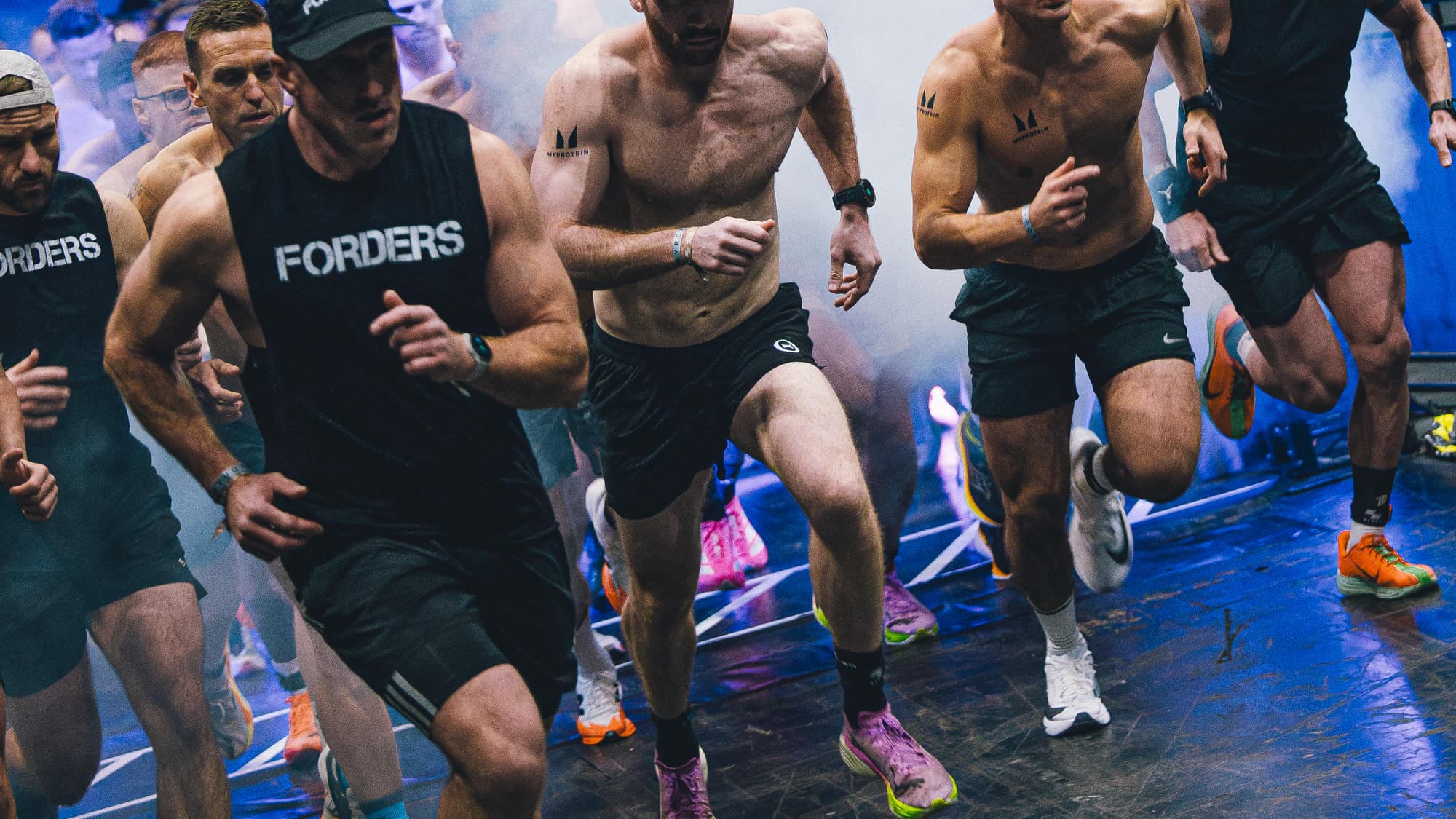
HYROX Birmingham: dates, venue, course and how to prepare
HYROX Birmingham runs 27 October to 1 November 2026 at the NEC. The race is identical to every other HYROX, so the venue, the travel and the twelve weeks before it are what you can actually control.
Race day
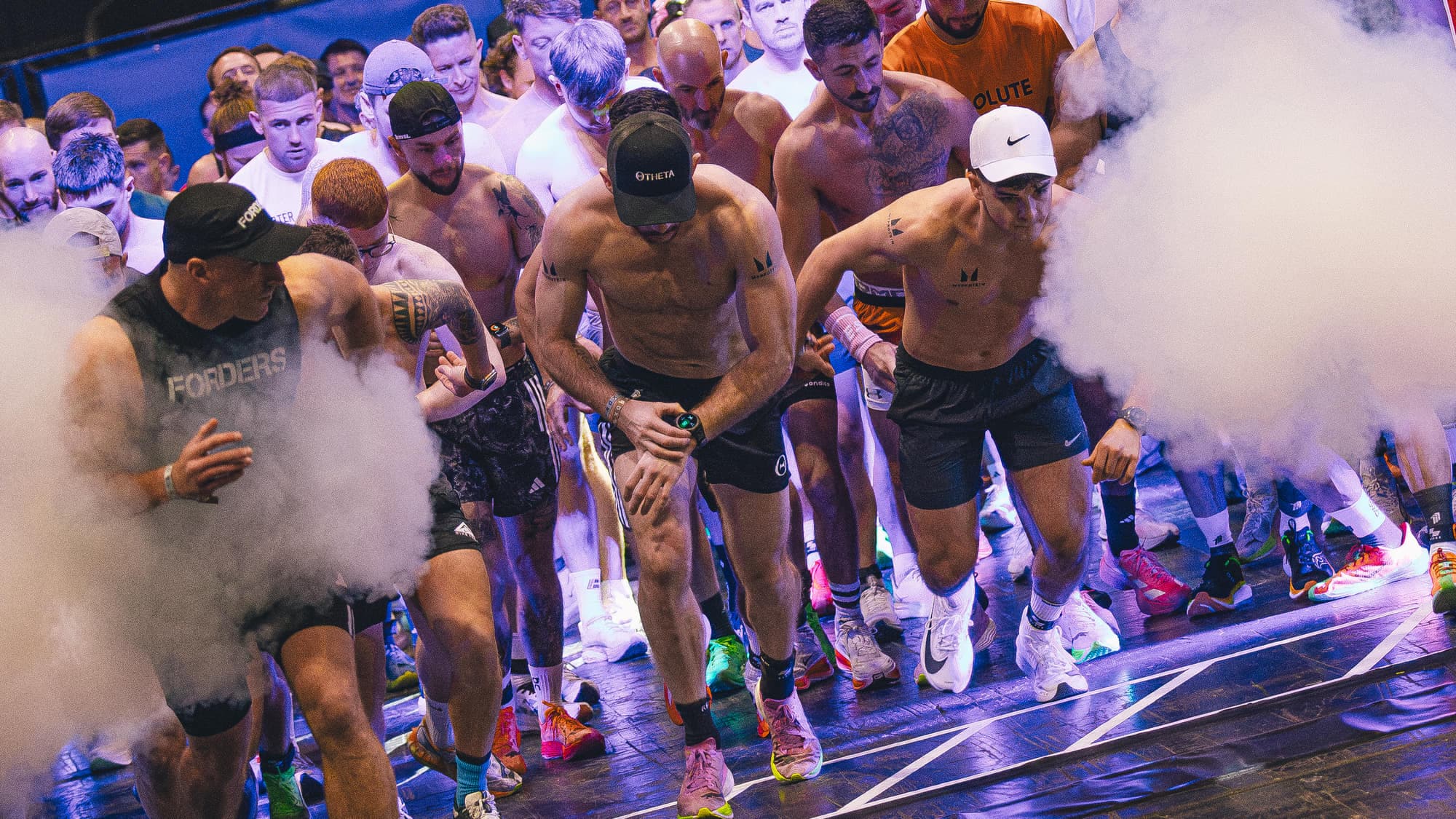
HYROX Cardiff: dates, venue, course and how to prepare
HYROX Cardiff runs 20 to 29 May 2027 at the Principality Stadium. The race is identical everywhere, so the venue, the travel and a spring training block are what decide your day.