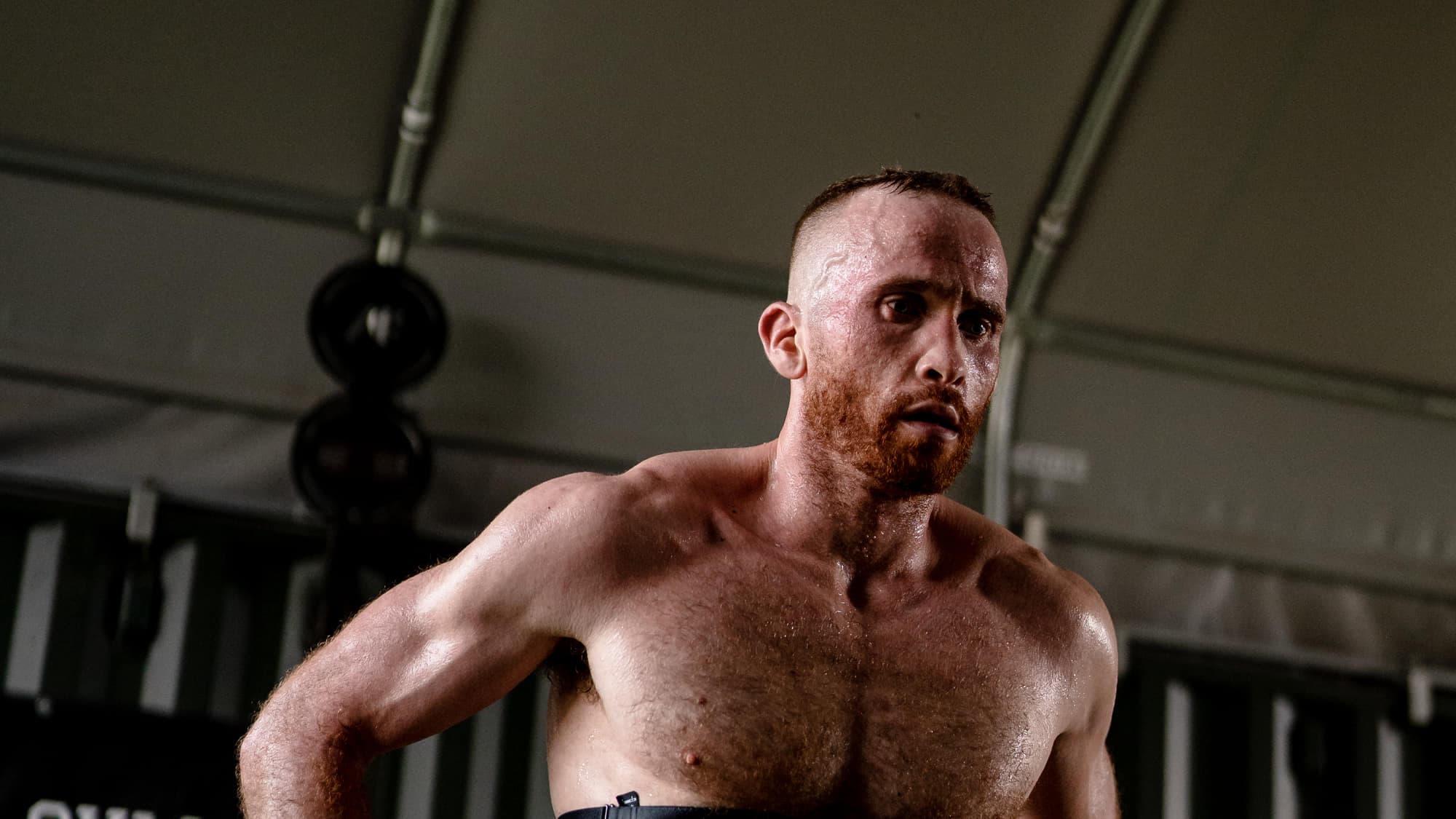
Most Hyrox events are indoor, but indoor doesn't mean cold. A packed arena with thousands of athletes warming up, racing and recovering across a weekend gets warm and humid regardless of what the weather is doing outside, and a venue without strong air-handling gets warmer still. We have no published venue temperature data to quote, and neither does anyone else putting a number on it.
This guide is what to do about it.
What heat does to your race
Above 24°C, the body has to divert blood flow to the skin for cooling. That blood isn't available for the working muscles. Three measurable consequences:
- Heart rate climbs 5-15 bpm for the same effort.
- Sustained aerobic capacity drops 3-8%.
- Sweat rate rises by 30-100%, accelerating dehydration.
For a 90-minute Hyrox at 26°C, expect a 3-5 minute slower finish than the same effort at 18°C. This isn't weakness; it's physiology.
Heat acclimation: training adaptation
The body adapts to heat. The protocol:
- 2-3 weeks of regular hot-environment training.
- 10-14 sessions at moderate intensity, 45-90 minutes each.
- Add layers if your training environment isn't naturally hot. A long-sleeved top + jacket can simulate 4-6°C of additional heat.
What changes after acclimation:
- Sweat starts earlier in the session.
- Sweat is more dilute (less salt loss per litre).
- Plasma volume expands, which is most of why the adaptation works.
- Perceived effort at the same heart rate drops.
For a race in 8 weeks, start heat training 4-5 weeks out. Acclimation peaks around week 2 and plateaus.
Race-week hydration
48 hours before race:
- Increase water intake by 500-1000 ml/day above baseline.
- Add electrolytes to one bottle per day (sodium 500-1000 mg, plus potassium and magnesium).
- Monitor urine colour. Light yellow = good. Dark = drink more. Completely clear = over-hydrated, add electrolytes.
24 hours before:
- Continue hydrated state.
- Add salt to meals. Don't go crazy; an extra 1-2 g sodium per day is plenty.
Race morning:
- 500 ml of water with electrolytes 2-3 hours before.
- 200-300 ml 30 minutes before.
- Final sip 10 minutes before start.
Pre-cooling
In the hour before the race, three pre-cooling techniques work:
- Cold water on wrists and back of neck. 60-90 seconds of cold flannel application. Drops core temperature 0.2-0.4°C.
- Cold drink. 300-500 ml of cold (not iced) water in the hour before. Internal cooling.
- Stay in the shade. Avoid baking in the sun in your warm-up gear.
What doesn't work: ice baths (constricts blood flow, can backfire), excessive caffeine (raises core temperature).
During the race
Sip water at every aid station. Don't gulp; it doesn't absorb faster and risks GI upset.
If the race is genuinely hot (28°C+):
- Drink at every aid station (most events have stations after stations 2, 4, 6).
- Pour water on the head and wrists if available. Evaporative cooling helps.
- Pace conservatively in the first 5 km. Heat compounds across the race; what feels easy at station 2 feels impossible at station 7.
What to wear in heat
Lighter than your training kit usually:
- Lightest breathable top you own. Vest tops work. Avoid cotton.
- Shorts preferred over leggings.
- Sweat-wicking sports bra for women.
- Headband to keep sweat out of eyes (more important in heat).
Skip:
- Compression garments. Trap heat. Marginal performance benefit; significant heat cost.
- Hats. Sometimes useful outdoors but inside they trap heat against the head.
- Long sleeves. Even thin ones add 1-2°C of effective body temperature.
Pacing adjustments
For a race 3-5°C hotter than your training environment, accept that your time will be 3-5 minutes slower. Pace for the conditions, not your historic PB.
The mental shift: aim for a controlled, well-executed race, not a fast race. The athletes who try to beat their cool-weather PB on a hot day are the ones who blow up at station 6.
Watch the warning signs
Heat exhaustion symptoms during a race, and what each one is telling you:
| Sign | What it means | What to do | |---|---|---| | You stop sweating despite working hard | Thermoregulation is failing | Stop. This is the serious one | | Goosebumps in the heat | Same thing, earlier | Stop and get cool | | Sudden dizziness or confusion | Core temperature is climbing | Stop and find a medic | | Cramp in unusual places | Salt and fluid loss | Stop, cool down, take fluid | | Pale, clammy skin | Circulation is prioritising cooling | Stop and get to a cool area |
Every row ends in "stop", which is the point. If you experience these, stop. Get to a cool area. Drink water. Find a medic.
A finishing time is not worth heat stroke. Recovery from heat exhaustion takes weeks; recovery from a slow Hyrox takes days.
Outdoor hot events
Some Hyrox events run partially outdoors (summer, Mediterranean venues). Additional considerations:
- Sunscreen. SPF 30+ on exposed skin. Sunburn during a race is a real possibility.
- Sunglasses. Useful for the runs.
- More water than indoor. Add 200-300 ml to pre-race hydration.
Training during a hot summer
If you're training through summer for an autumn race:
- Embrace the heat as acclimation. Don't only train in the cool early morning.
- Hydrate aggressively post-session. Body weight change is the guide: 1.5 L per kg lost.
- One easy day per week. Heat training adds cumulative load; you need more recovery than usual.
The honest summary
Heat is part of Hyrox. Even indoor events get warm. Train for it (heat acclimation 2-3 weeks before), hydrate for it (48 hours of deliberate fuelling), pre-cool for it (cold water + cold drinks), and pace for it (3-5 minutes slower than cool-weather target).
Don't fight the conditions. A controlled race in heat is better than a blown-up race chasing a cool-day PB. The wins come from athletes who respect what the temperature does to physiology.
The thermostat doesn't care about your training. Adjust the strategy and you still finish strong.
Related
Next step
Heat punishes an under-built aerobic base harder than anything else on this page. The HYROX training plans build that base across the twelve weeks before the race.
The fitness assessment quiz tells you how much of one you have now.
[ FAQ ]
Frequently asked
Do Hyrox arenas get hot?
Yes. Even in winter, a closed arena with thousands of athletes hits low-to-mid 20s Celsius. Summer events in less ventilated venues can exceed 28°C.
How does heat affect performance?
Above 24°C, sustained aerobic performance drops 3-8%. Above 30°C, it can drop 15-20%. Heart rate elevates for the same effort. Cooling capacity becomes a limiter.
Can you train for heat?
Yes. 10-14 sessions in a hot environment (or wearing extra layers) over 2-3 weeks produces measurable heat acclimation. Sweat rate increases, plasma volume expands, perceived effort drops.
What's the most important thing to do for a hot race?
Hydrate well in the 48 hours before. Pre-cool the body in the hour before (cold water on wrists, neck). Sip water at every aid station during. Don't try to set a PB on a hot day.
Written by
The Suth Performance teamCoaches and editors
The Suth Performance programming team, led by HYROX Elite 15 athlete Ben Sutherland. They write the training, technique and race-day guides on this site, and Ben reviews every one before it is published.
[ KEEP READING ]
Related guides
Race day
How do HYROX waves and start times work?
Waves go off at scheduled intervals, often every ten minutes, and you are assigned one. Starting in the wrong wave is a disqualification, not a telling-off.
Race day
HYROX Birmingham: dates, venue, course and how to prepare
HYROX Birmingham runs 27 October to 1 November 2026 at the NEC. The race is identical to every other HYROX, so the venue, the travel and the twelve weeks before it are what you can actually control.
Race day
HYROX Cardiff: dates, venue, course and how to prepare
HYROX Cardiff runs 20 to 29 May 2027 at the Principality Stadium. The race is identical everywhere, so the venue, the travel and a spring training block are what decide your day.