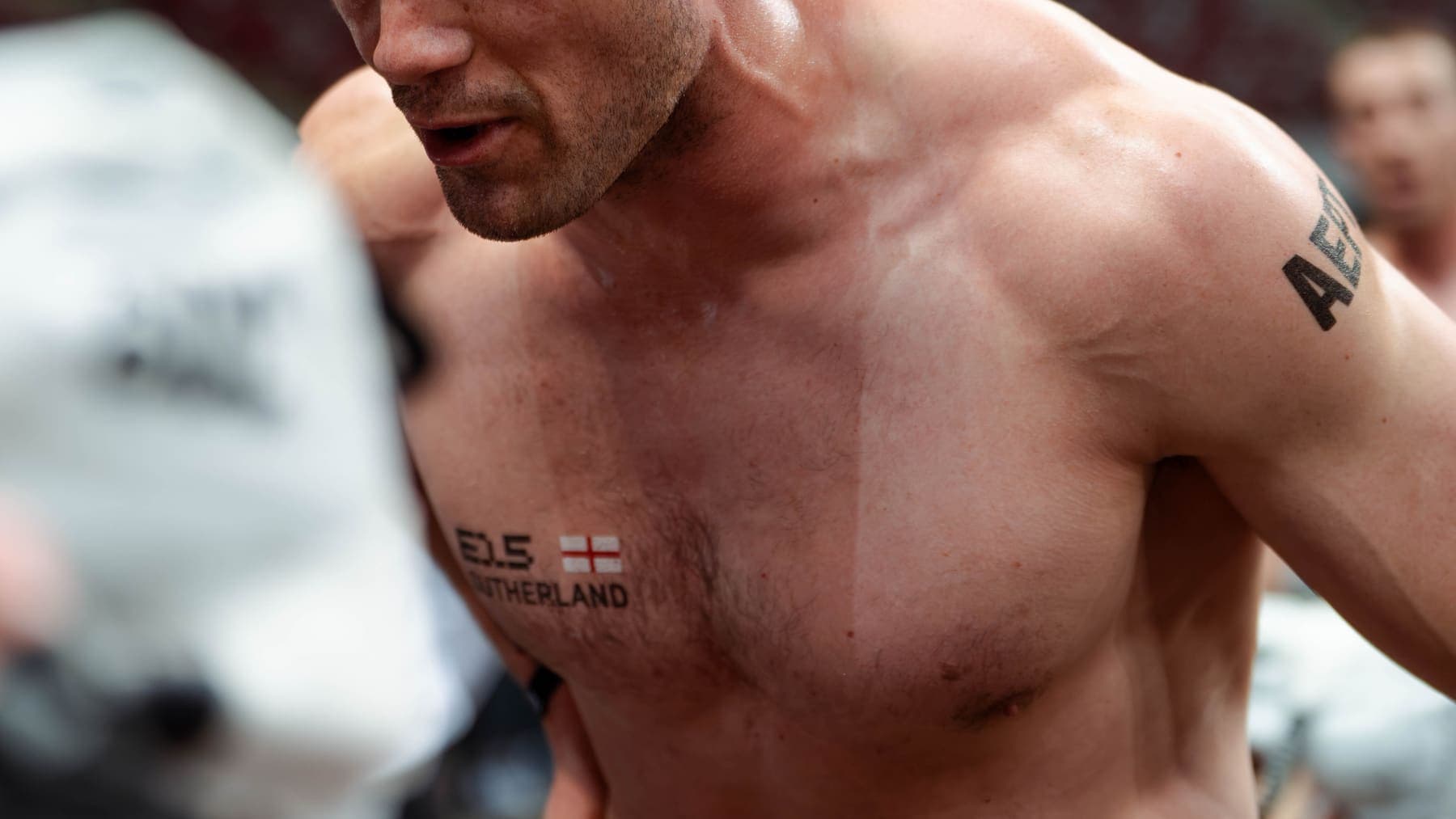
Women's Hyrox has its own standards, its own podium, its own community. The race format is identical to men's: 1 km run plus station, repeat eight times. The weights, pacing strategy, and the specific physical training adjustments are different. This guide is what most women's coaching content overlooks.
The women's standards (open category)
| Station | Open women's | |---|---| | Ski erg | 1,000 m | | Sled push | 102 kg, 50 m total (25 + 25) | | Sled pull | 78 kg, 50 m total | | Burpee broad jump | 80 m, 1 m per jump | | Rower | 1,000 m | | Farmer's carry | 16 kg per hand, 200 m | | Sandbag lunges | 10 kg, 100 m | | Wall ball | 100 reps, 4 kg to a 2.70 m target |
Doubles uses different splits (each athlete does half). Women's Pro shares a column with Men's Open: 152 kg sled push, 103 kg sled pull, 2 x 24 kg carry, 20 kg sandbag and a 6 kg wall ball, still to the 2.70 m target. Masters women do not get lighter weights; the rulebook has no age-based weight scaling at all.
The stations that decide your time
Across thousands of women's race timings, three stations account for most of the variance:
1. Wall ball. Median women's wall ball is 5-7 minutes. The fastest women complete it in under 4. The slowest take 12+. The difference is rarely arm strength; it's pacing into the station with intact legs and a steady breathing rhythm.
2. Sandbag lunges. Often underestimated in training because it looks light. 100 m of lunges with a 10 kg sandbag, after a 1 km run, after wall ball, is humbling. Women who train sandbag lunges in race-tired states finish 90 seconds faster on race day than those who don't.
3. Burpee broad jump. 80 burpee broad jumps. The technique difference between an efficient burpee and a sloppy burpee is 30 seconds across the station. Drilled, it becomes the most automatic station.
The sled push and sled pull look intimidating but are usually not the limiter. Strong women in the open category move the 102 kg sled in 90-150 seconds.
The pacing strategy
Women who finish well at Hyrox tend to follow a consistent pattern:
- First two stations at 70-75% effort. The temptation is to attack the ski erg and sled push because they're early. Resist.
- Build through stations 3-5. Burpee broad jump, rower, farmer's carry. Hold a strong but conversational effort.
- Survive stations 6-7. Sandbag lunges and wall ball. This is where most women lose minutes. Steady, no-stop, breath-matched-to-effort.
- Empty the tank in the last 1 km run + finish chute. The finish line is the only place to leave nothing in reserve.
The bad strategy: ski erg at 100%, sled push at 100%, then crawl through wall balls because the legs are gone.
Training adjustments that matter
Women's Hyrox training mirrors the standard structure (aerobic base, strength, race-specific intervals) with three emphases:
1. Aerobic base is non-negotiable
The 1 km runs add up to 8 km. Women who can't comfortably run 8 km at conversational pace before starting Hyrox-specific training will struggle. Spend 8-12 weeks building a base of 25-35 km of running per week, mostly easy, before adding intensity.
2. Posterior chain strength
Deadlift variations, hip thrusts, single-leg work. The sled push and lunges both demand glute and hamstring drive. Two strength sessions per week, twelve weeks out from race, transforms station times.
3. Wall ball volume tolerance
A specific weekly session: 5 sets of 30 wall balls (75 total over the session) with 90-second rest. Build to 5×50, then 5×75 unbroken. The race-day station becomes manageable.
Common myth: "I'm not strong enough for Hyrox"
The race weights are scaled. The standard 102 kg sled push is moveable by any woman with 6-12 weeks of sled-specific training. The 16 kg farmer's carry is approachable for any woman who can carry two shopping bags up the stairs. The wall ball at 4 kg is a kettlebell most women can press overhead.
Hyrox is not a strength sport for women. It's an aerobic endurance sport with strength accents. The athletes who win in women's Hyrox tend to come from running, triathlon, or distance-focused CrossFit backgrounds, not powerlifting.
Race-day nutrition for women
A specific consideration: women tend to under-fuel during long aerobic efforts. For a Hyrox race lasting 90+ minutes:
- Race morning: A real meal 2-3 hours before. 80-120 g carbohydrate, moderate protein, low fat and fibre. Porridge with banana and honey is the classic.
- 30 minutes pre-race: 30-50 g fast carbohydrate (gel, banana, sports drink).
- Mid-race: Most women don't need mid-race fuel for a 90-minute Hyrox, but a gel before station 5 or 6 helps athletes who started under-fuelled.
The cycle question
A common ask: does menstrual cycle phase affect Hyrox performance? Honest answer: the research is mixed, individual variation is huge, and most women who track their cycle don't find race-day performance correlates strongly with cycle day. The bigger lever is consistent training and sleep.
If you're in the luteal phase on race day and feel sluggish, that's normal. Pace conservatively for the first half and trust your legs.
The honest summary
Women's Hyrox is one of the most welcoming categories in fitness racing. The standards are sensible, the pacing is the same skill men train, and the community is large and friendly.
The fastest women aren't the strongest; they're the most aerobically developed and the best pacers. Train the run. Train the wall ball. Train the sandbag lunges in a tired state. Race the back half.
Sub-90 is achievable for any healthy adult woman willing to put in 16 focused weeks. Sub-80 is a longer project. The community at the finish line is the same regardless of your time.
Related
- The full women's standards for Open and Pro
- Age groups, and why weights never scale with age
- The HYROX guide
[ FAQ ]
Frequently asked
What weights do women lift in Hyrox?
Open women's category: sled push 102 kg, sled pull 78 kg, sandbag lunges 10 kg, farmer's carry 16 kg per hand, wall ball 4 kg to a 2.70 m target, 100 reps. Doubles, pro, and masters women's have separate weights. Check the official Hyrox standards for your exact category.
Should a woman do the open or doubles category for her first Hyrox?
Open solo is the most popular debut for women. Doubles is great if you already have a trusted partner who's at a similar fitness level. Pro is for women who can already finish open in under 80 minutes.
How is the wall ball different at 4 kg vs 6 kg?
The lighter ball is still a 100-rep set; the throwing motion is identical. The challenge is sustained shoulder + hip endurance, not raw power. Most women's wall ball times sit between 4-7 minutes.
What's a good first Hyrox time for a woman?
Sub-110 is a strong debut for a recreationally fit woman. Sub-95 is a strong second race. Sub-90 puts a woman in the upper third of the open field at most UK events. The world-best is around 60 minutes.
Written by
The Suth Performance teamCoaches and editors
The Suth Performance programming team, led by HYROX Elite 15 athlete Ben Sutherland. They write the training, technique and race-day guides on this site, and Ben reviews every one before it is published.
[ KEEP READING ]
Related guides

Training
15 HYROX workouts for every fitness level
Fifteen sessions you can do this week, grouped by whether you are starting out, building, or sharpening for a race. Most need nothing more than a treadmill and a couple of kettlebells.
Training
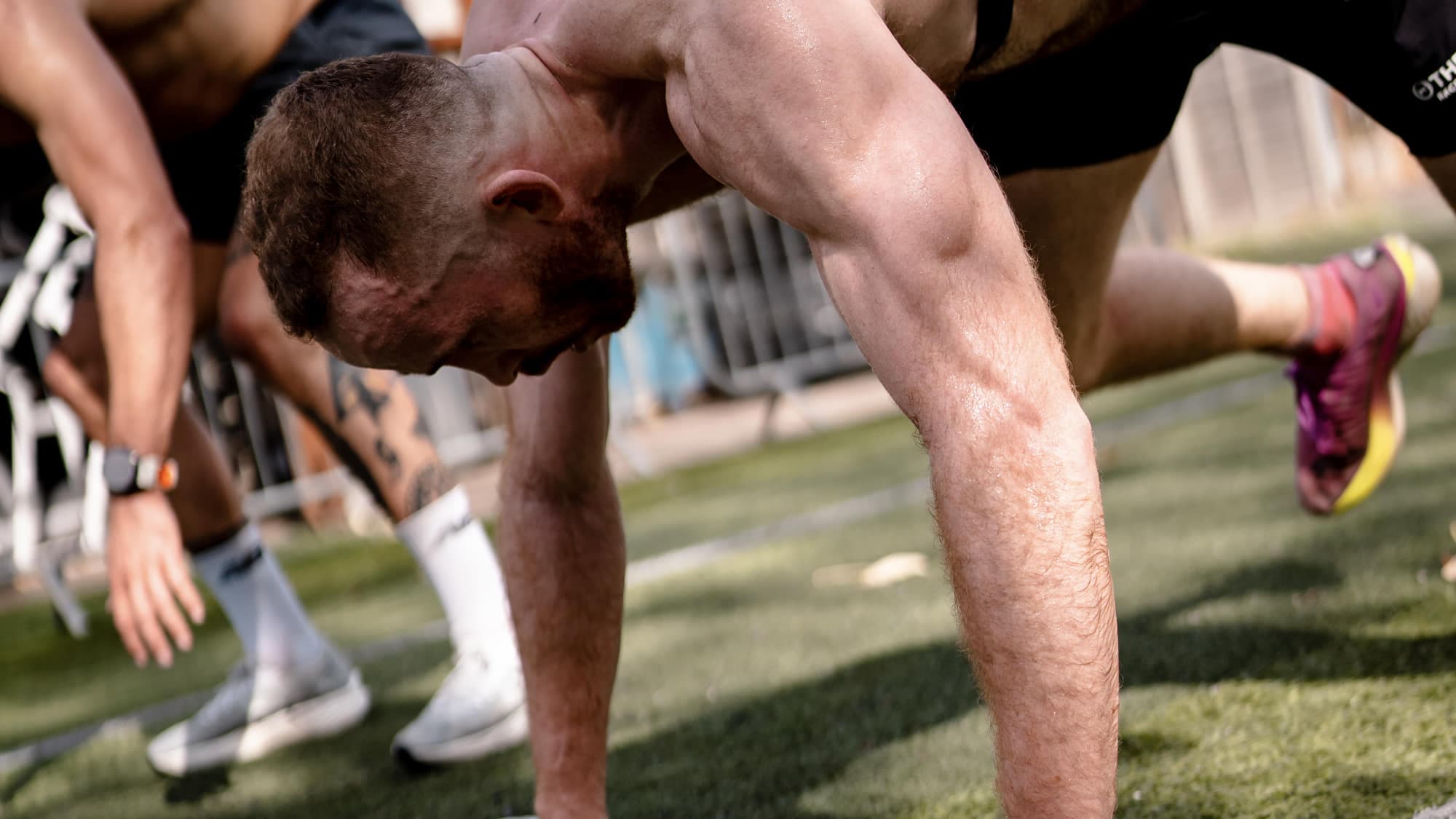
5 workouts that build a faster HYROX burpee broad jump
The station that spikes heart rate harder than anything else, immediately before the one place you can recover. Five sessions for rhythm, legal form and recovery control.
Training
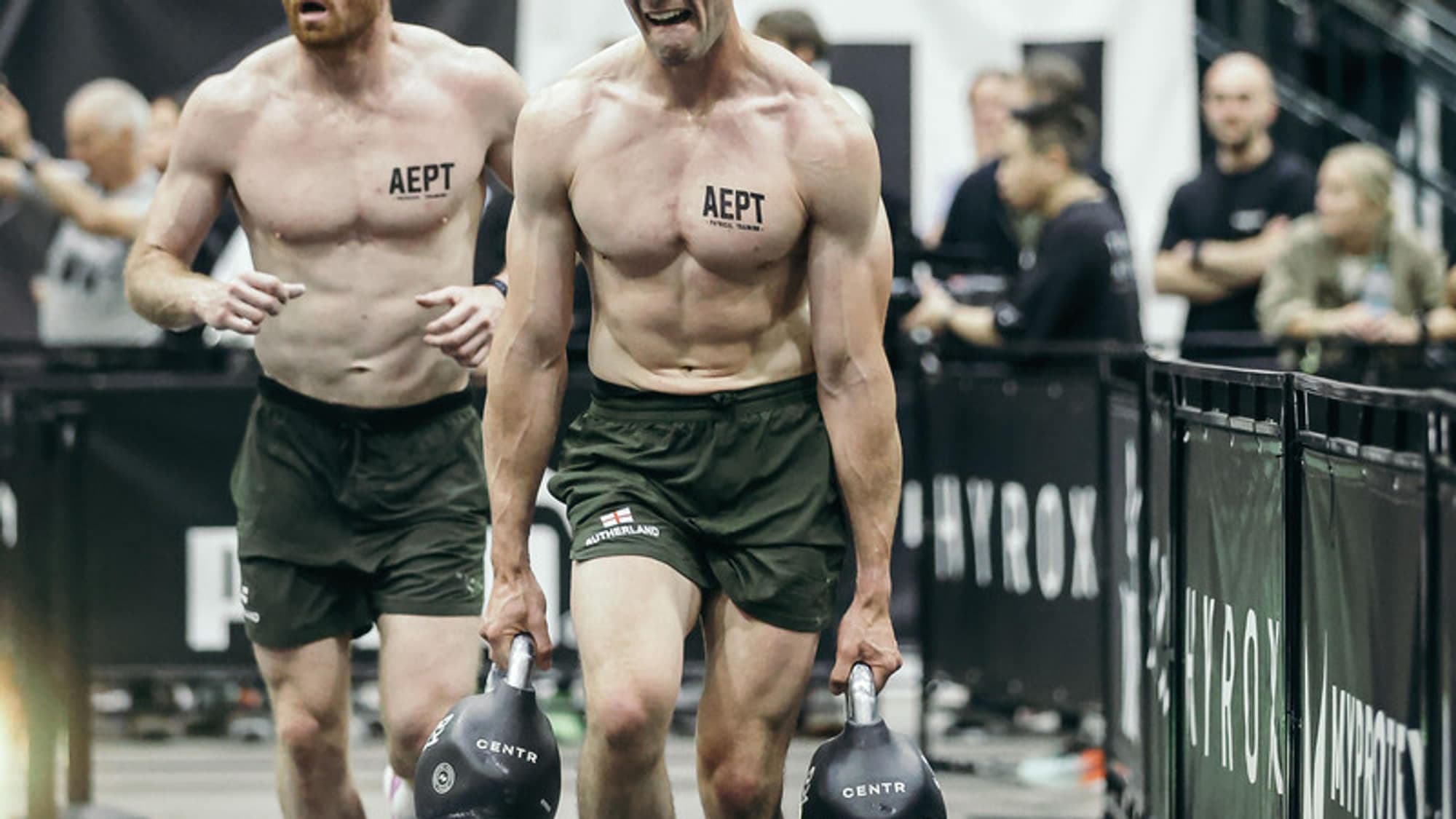
5 workouts that build a faster HYROX farmers carry
Your grip arrives at station six already spent by station three. Five sessions built around that coupling, which is the thing almost nobody trains.