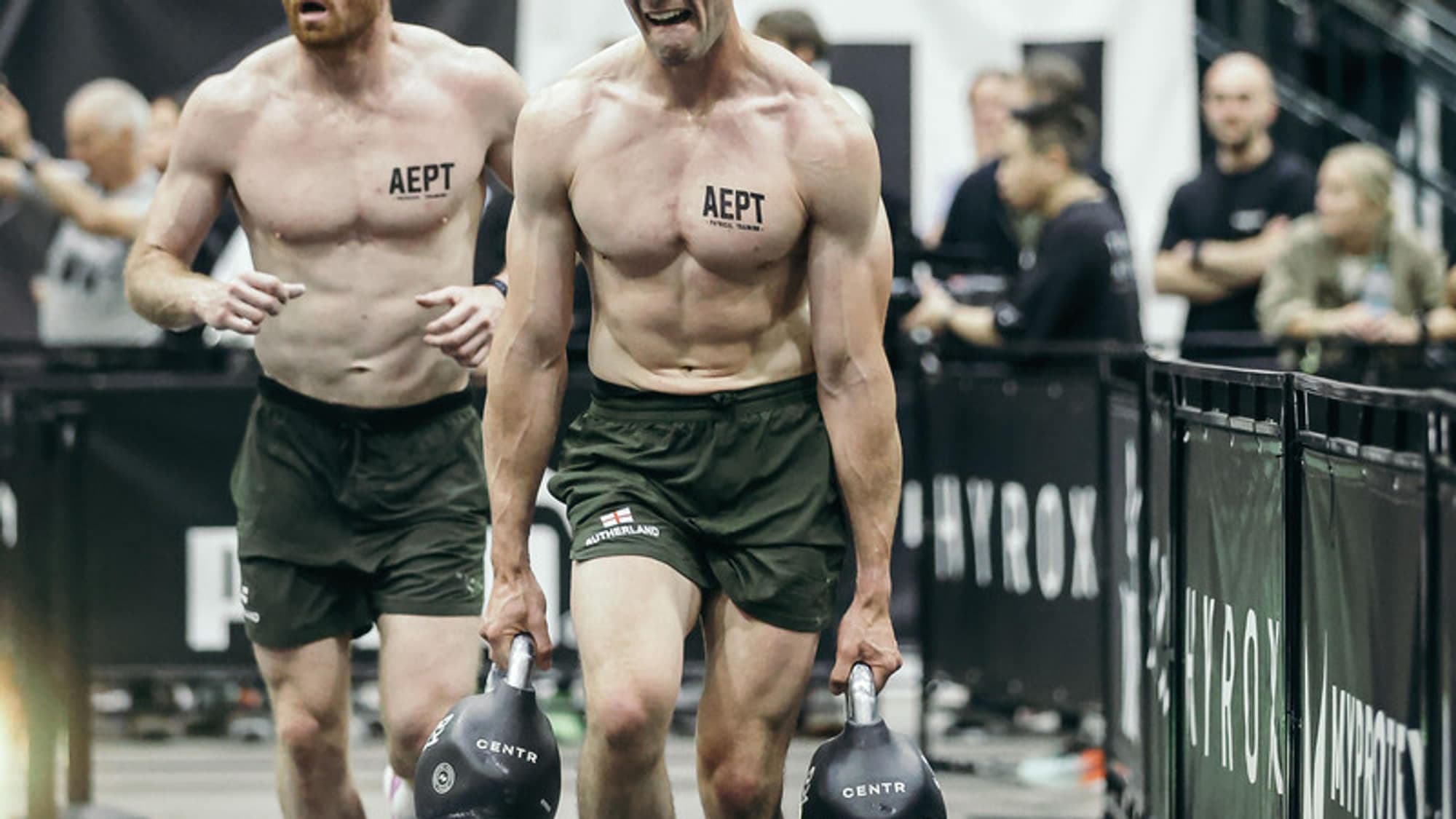
The farmers carry is the station that exposes the difference between strong and conditioned. A strong athlete can pick up 48 kg of kettlebell weight and walk with it. A conditioned athlete can pick it up, walk 200 metres without dropping it, and arrive at the wall balls with a heart rate that's actually lower than when they started. That's the gap. And it's bridgeable in 12 weeks of training.
This piece breaks down the grip strategy, the walking technique, the breathing pattern, and the most common race-day mistake that turns a 90-second carry into a 3-minute disaster.
What the farmers carry actually demands
Two kettlebells, hanging at your sides. 200 metres of forward walking, broken into four 50-metre laps (in most venues, some larger race floors run two 100-metre laps). Total time for age-group athletes: 90 seconds to 3 minutes. Total time for elite athletes: 75-90 seconds.
The demands stack like this:
- Grip endurance. Not maximum grip strength, the kettlebells aren't heavy enough for that. What kills people is the sustained, isometric grip at sub-maximal load.
- Shoulder packing. Letting the shoulders pull forward and down (which they want to under load) loads the upper traps and degrades your walking pattern.
- Aerobic recovery. The carry is meant to be a relative recovery station. If your heart rate is climbing rather than steady or dropping during the carry, your pacing on the previous stations was too aggressive.
Grip strategy: full grip, hands deep
Three rules:
1. Get your hand deep on the handle. Hook the handle into the heel of your palm, not the fingertips. The further from the joint your fingers, the more leverage they have. Athletes who grip with their fingertips fail at metre 90.
2. Use a full grip, not a hook grip. The hook grip (thumb wrapped) saves a fraction of a second on the pick-up but the thumb fatigues fast under sustained load. Across 90 seconds of carrying, a full grip wins.
3. Don't death-grip. Squeezing the handle at 100% from the start is a guaranteed grip failure by metre 120. Use the lightest grip that holds the kettlebell. Re-grip every 25 metres if your hands relax during the walk.
If you've never trained grip endurance specifically, expect your forearms to feel like wood by metre 150 of your first farmers carry under fatigue. That's not a strength problem, it's an endurance problem, and it disappears within four weeks of dedicated training.
Walking technique: short steps, tall posture
Four cues:
1. Stand tall. Pull your shoulders down and back. Pretend a string runs from the top of your head to the ceiling. The natural reflex under load is to hunch, fight it.
2. Short, fast steps. Stride length wants to be about 70% of your normal walking stride. Long strides under load destabilise the carry and waste vertical energy on bobbing. Short strides keep the kettlebells in a tight oscillation.
3. Look 5 metres ahead. Not at the floor (rounds the spine), not at the finish (mentally taxing). Eyes at horizon, neck neutral.
4. Breathe through pursed lips. The carry should be brisk walking pace, not a run. Aim for a 4:2 breathing pattern, four steps in, two steps out, to drop heart rate over the course of the carry.
The best Hyrox athletes don't speed up on the farmers carry. They walk it at exactly the pace they could sustain forever, controlled, tall, breathing easy. The seconds you save speeding up are surrendered double on the wall balls afterwards.
The pick-up and the drop
The pick-up is two seconds that decide the next 90:
- Stand between the kettlebells, feet shoulder-width.
- Hip-hinge straight down, bend at the hips first, then knees.
- Grip the handles deep. Squeeze the bells into the floor as you stand.
- Stand tall in one smooth movement. The lift should feel light if you've set up correctly.
If you have to wiggle, re-grip, or shuffle the bells before you start walking, your set-up was wrong. Practise the pick-up in training until it's one movement.
The set-down at the end:
- Hip-hinge down. Don't drop the bells from chest height, too jarring, looks scrappy, can damage your wrists if the kettlebells torque.
- Bells touch the floor, you stand up, you transition.
Pacing strategy: even, never accelerating
The number-one race-day mistake on the farmers carry is starting fast and slowing. Athletes feel strong off the running into the station, pick up the bells, and walk the first 50 metres at a brisk shuffle. The pace gets ahead of the breathing. By metre 100 they're breathing hard but tired, and the grip is fading.
What works:
- Lap 1 (0-50 m): brisk walk, not jog. About 80% of your maximum sustainable carry pace.
- Lap 2 (50-100 m): same pace. Breathing normalising.
- Lap 3 (100-150 m): same pace. This is where everyone wants to slow. Don't.
- Lap 4 (150-200 m): same pace. Heart rate should be dropping as you arrive at the wall balls.
If you're going to drop the kettlebells once, the right place is at the end of lap 2 (100 m mark). One five-second reset there is cleaner than three desperate ten-second stops in the second half.
Drills that transfer to race day
Three drills, twice a week during the build phase:
1. Heavy farmers walks (90-100% of race weight). 4 sets × 30-40 metres. Builds absolute carry capacity. Done at the end of strength sessions, fresh enough to maintain posture.
2. Race-weight under fatigue. After a 5-minute run interval, immediately pick up race-weight kettlebells and walk 100 metres. 3 sets. This is the actual race scenario, fatigued aerobic system, sustained grip. Most race-day failures happen because athletes never train this transition.
3. Grip-only finishers. Dead hangs from a pull-up bar for time, after sessions. 60 seconds × 3 sets builds the isometric grip endurance specifically. Cheap, fast, effective.
What good looks like
A good Hyrox farmers carry at age-group level:
| What | Where it should sit | What it tells you | |---|---|---| | Station time | 100-130 seconds | Three minutes means grip, not fitness | | Drops | Zero, or one you planned | Unplanned drops cost more than the pause | | Stride | Short, fast, even | Long strides waste energy on bobbing | | Posture | Tall, shoulders back, neck neutral | The first thing to go when grip fades | | Heart rate | Stable or dropping across the 200m | Climbing means the run before was too hard | | Exit breathing | Controlled, ready to lunge | The carry should not cost you the next station |
If your carry is taking 3 minutes with multiple unplanned drops, the fix isn't more carries in training. The fix is grip endurance (dead hangs, longer carries at lower weight) and pacing discipline on the kilometres before.
How Suth Performance programmes the carry
The First Race programme builds carry capacity from week 1 with shorter, lighter carries that progress to race-weight by week 8. Sub-90 and Pro programmes layer in race-weight carries under fatigue, usually after a high-intensity interval, twice a week from week 4. Grip endurance work (dead hangs, dumbbell hangs, towel pull-ups) runs as a finisher throughout.
Doubles programming splits the carry between athletes, each does 100 metres of the 200, but the demands per athlete are higher because the second athlete picks up immediately, with no run recovery. The doubles programme accounts for that with paired interval work.
In practice
The farmers carry is a deception. It looks like a strength station. It's actually an aerobic recovery station for athletes who paced well, and a death-march for athletes who didn't. Grip endurance, short strides, even pacing, and honest kilometres before the carry, those four things turn it into a 90-second walk that resets you for the wall balls. Skip any one and the carry will quietly cost you minutes you won't get back.
More on the farmers carry
- The faults that cost time on the farmers carry, and the rulebook standards behind them.
- Five sessions that build a faster the farmers carry, with benchmarks to test progress.
- The the farmers carry station page for the movement standard in full.
- Station order: what this station borrows, and where the bill arrives.
[ FAQ ]
Frequently asked
How heavy are the Hyrox farmers carry kettlebells?
24 kg per hand for men's open, 16 kg per hand for women's open. Doubles uses one set between two athletes. Pro divisions go up to 32 kg per hand. The lane is 200 metres total, four laps of 50 metres in most race venues.
Can I drop the kettlebells during the farmers carry?
Yes, but only between metres, not within a metre. If you drop, you must reset and start the metre from where you dropped. Practically, planning a single mid-station drop is fine; multiple drops cost serious time.
Should I use a hook grip or a full grip?
Full grip for most athletes. Hook grip (thumb wrapped) is faster to set up but more fatiguing on the thumb after the first 50 metres. The handles on Hyrox kettlebells are wide enough that the hook offers diminishing returns.
Written by
The Suth Performance teamCoaches and editors
The Suth Performance programming team, led by HYROX Elite 15 athlete Ben Sutherland. They write the training, technique and race-day guides on this site, and Ben reviews every one before it is published.
[ KEEP READING ]
Related guides
Technique
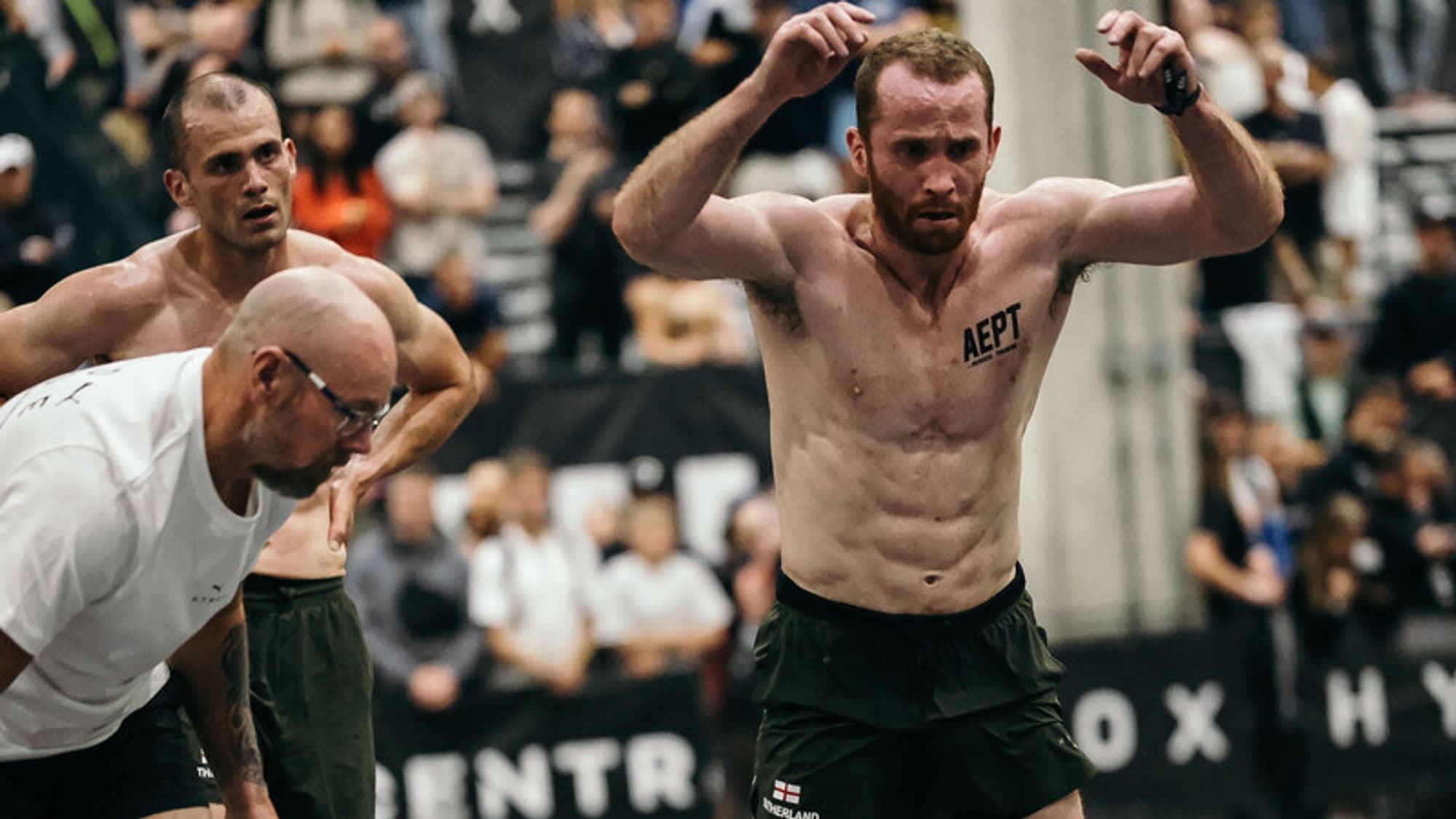
Hyrox burpee broad jump: technique, breathing, and the rhythm that saves the back end
The burpee broad jump is where pacing goes to die. Twenty metres of compounding fatigue. The technique fixes, breathing pattern, and scaling options that protect the second half of your race.
Technique
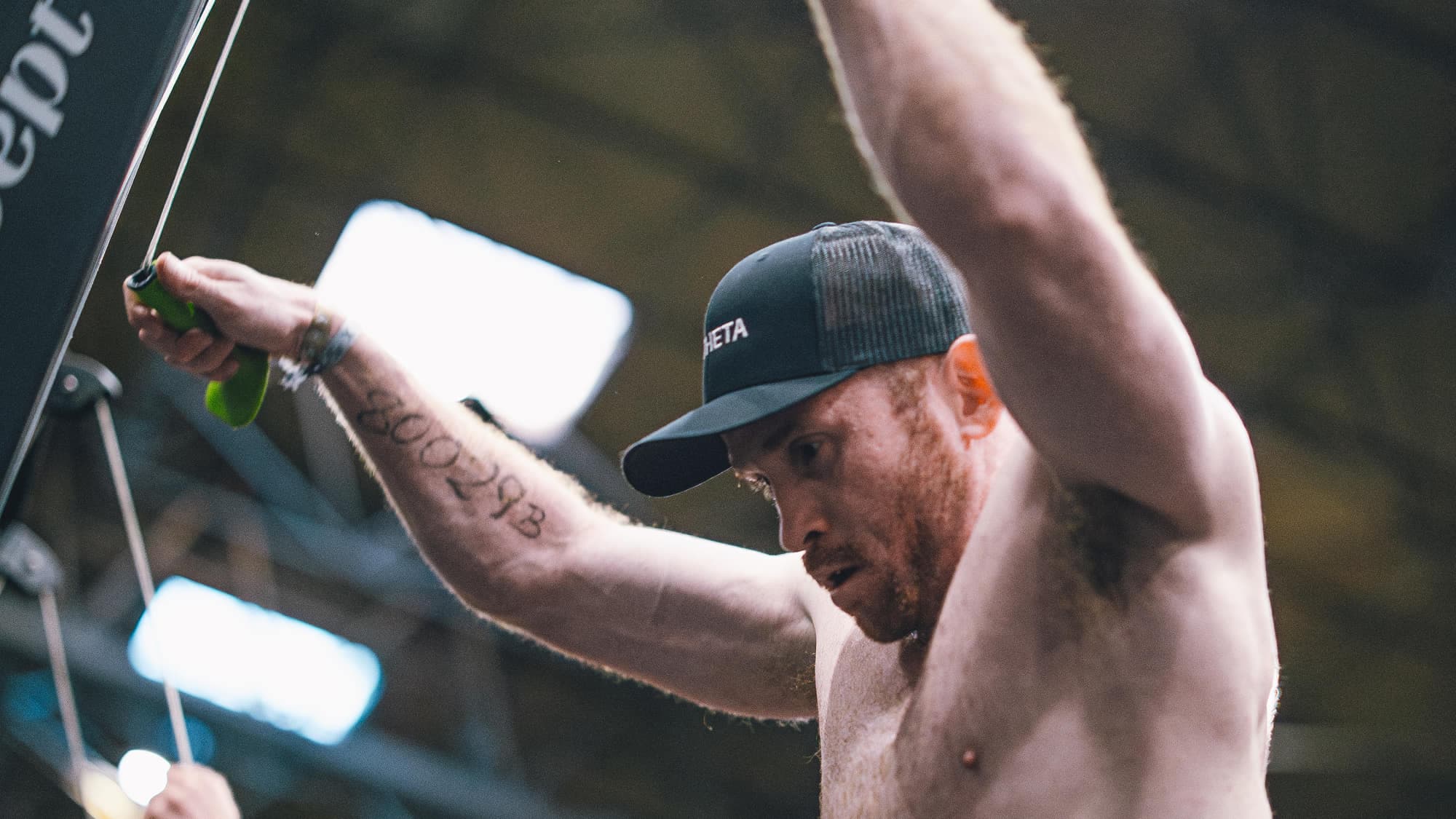
Ski erg for Hyrox: stroke rate, damper, and the 1-km split
The ski erg is station one. Get it wrong and you've taxed your shoulders for the next 80 minutes. The technique and pacing that protect the race.
Technique
Burpee broad jump mistakes: what's costing you 60 seconds
There is no minimum jump distance, which changes the whole strategy. Five faults, the 5cm rule almost nobody knows, and why long jumps are usually the wrong answer.