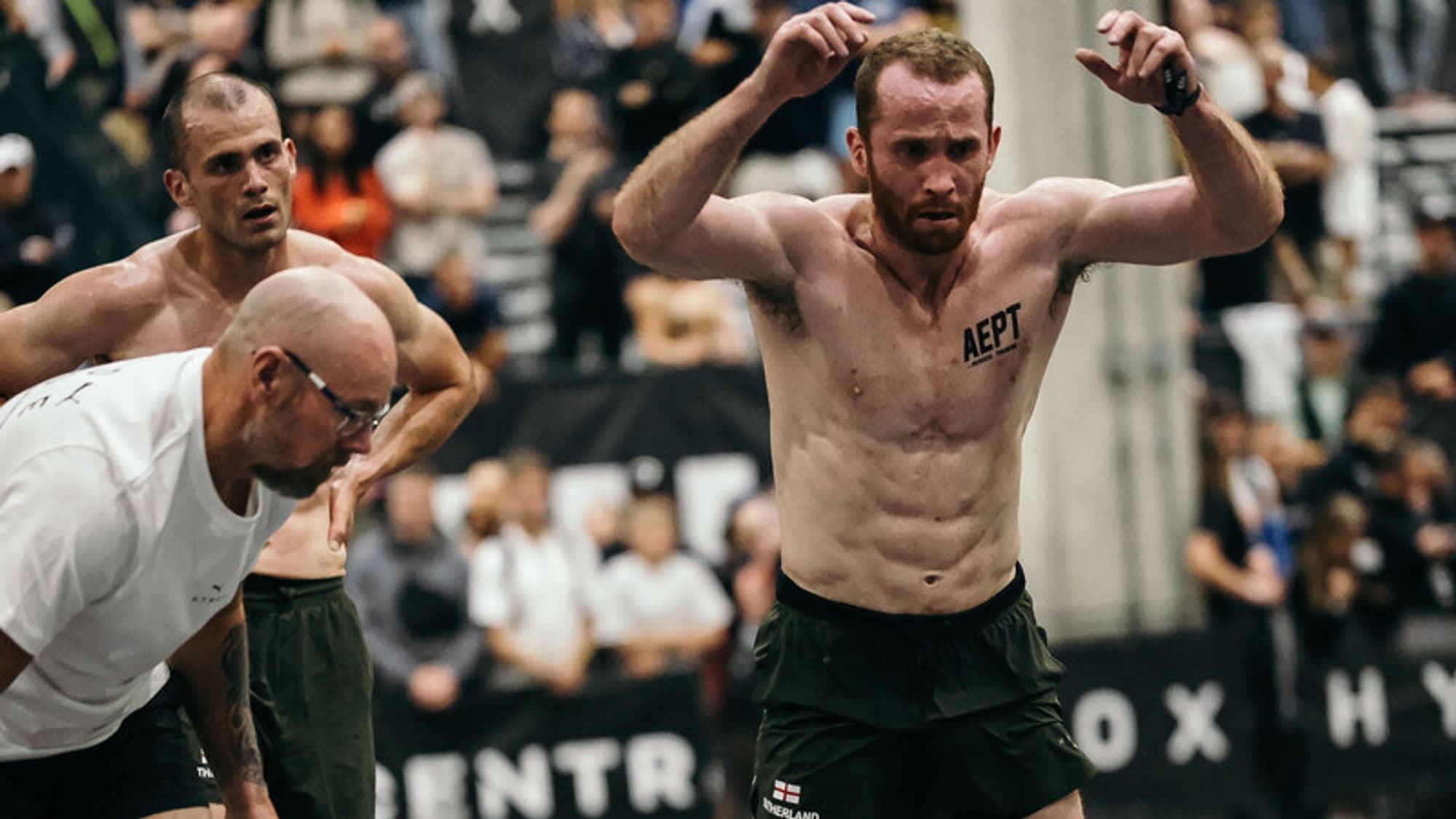
Break the 80 metres into planned sets before you start, and keep the jumps short. That is the whole answer, and it is the opposite of what most first-timers do.
The burpee broad jump decides the back half of the race. Not because it is the hardest station, the sled push is harder and the wall balls are longer, but because it has no rhythm to coast on. Each rep is a full reset: chest down, jump up, jump forward, stand.
This piece covers the technique, the breathing pattern, the scaling options, and the most common pacing mistake that turns a 2:30 station into a 5-minute disaster.
What the burpee broad jump actually demands
Twenty metres. One rep covers roughly 80-110 cm of forward progress for most athletes. Strong jumpers cover 130 cm. That's 18-30 reps per athlete, but the variability is wide, your standing broad jump determines it, and most people have never trained it specifically.
Three demands stack:
- Aerobic endurance. Each rep raises your heart rate; you do not get to coast between them. The standing component is your only recovery and it lasts about half a second.
- Hip extension power. The jump is a horizontal leap from a near-squat. If your jump is short, you do more reps. More reps means more burpees. More burpees means more time.
- Postural control under fatigue. The chest-to-floor portion of the burpee can degrade into a sloppy crawl as fatigue builds. Slow, ugly burpees are dangerous and waste energy.
Body position: tight, neutral, hinged
Three positions, in order of importance:
1. Tight midline through the descent. When you drop to the floor, your body should land as a controlled unit. Not feet first, then hips, then chest. All at once, with your core braced. Slack midlines waste energy and risk a tweaked back when fatigue hits in the second half.
2. Neutral neck. Look at the floor about 30 cm ahead of your hands as you go down. Looking forward (chin up) makes the burpee feel harder by extending the cervical spine. Look at the floor.
3. Hinge, don't squat. The transition from burpee to broad jump is a hinge, push the floor away, drive your hips forward, and load the posterior chain for the jump. If you stand straight up and then try to broad jump, you've already lost the elastic energy that makes the leap efficient.
The good burpee broad jump looks calm. It's not graceful, it's controlled. There's no wasted vertical movement, no extra step before the jump, no second of standing tall to catch the breath. It's a single fluid motion: floor, jump, floor, jump.
The breathing pattern that holds together
Most athletes default to one of two breathing patterns and both are bad:
Bad pattern A. Breath-holding. You hold the breath through the burpee, gasp on the jump, then hold again. Five reps in and you're light-headed. Your VO2 collapses.
Bad pattern B. Hyperventilation. You panic-breathe at every transition. Twenty-five short breaths per minute. Net oxygen exchange is poor because tidal volume is too low.
What works, the three-count.
- Breath out on the descent (chest to floor).
- Breath in on the stand-up.
- Breath out on the jump.
It's a controlled, slow, audible exhale on impact and on push-off. Sounds like a controlled grunt. Practise it in training, by race day, this should be automatic.
Foot positioning: shoulder-width to slightly wider
The broad jump is biomechanically a horizontal squat-jump. Your feet want to be roughly shoulder-width apart, or slightly wider if you have hip mobility constraints. Wider feet means less hamstring/glute drive, narrower feet means an unstable platform.
After the jump, land with bent knees absorbing the impact. Do not lock out on the landing, that's a knee injury waiting to happen, especially when fatigued.
The arm swing
The arm swing is free distance. Athletes who don't use their arms lose 15-20 cm per jump. Over 20 metres that's two to three extra reps, and at 8-12 seconds per rep that's 16-36 extra seconds of station time.
How to use the arms:
- Hands push off the floor at the end of the burpee.
- Swing them back behind you as you stand and hinge.
- Swing them forward and up as you jump.
The arm swing initiates the jump. It is not an afterthought. Practise it in training without the burpee, just standing broad jumps with a rhythmic arm swing, until it feels automatic.
Scaling: when and how
Two legitimate scaling decisions:
Scaling for first-time finishers. If you can complete a clean burpee broad jump but worry about the volume, you can break it up. The race standards do not require unbroken sets. You can take a knee, take a breath, take five steps if you need to. The clock is running, so you want fewer breaks rather than more, but a planned ten-second break at the halfway mark is better than a 60-second collapse at metre 18.
Scaling for injuries. If a wrist injury makes the burpee dangerous, you can substitute a no-press burpee (chest to floor, hands off the floor on the way up, knees and hips do the work). This is slower per rep but safer. If a knee injury makes the broad jump dangerous, step out of the jump and do a clean stride forward instead, note that this is a personal scaling decision; competitive Hyrox standards require the broad jump portion to be a true two-foot take-off and landing.
Drills that transfer to race day
Three drills, in order of impact:
1. Race-pace burpee broad jump intervals. Once a week during the build phase. Three rounds of 10 reps with 90-second rest. The point isn't volume, it's practising the rhythm and breathing under fatigue.
2. Maximal standing broad jumps. Twice a week, six sets of three, full rest between sets. Builds the absolute jump distance. Most athletes can add 15-25 cm to their standing broad jump over a 12-week build with consistent training. That alone shaves 30-45 seconds off the station.
3. Burpee-to-tall-jump. Replaces the broad jump with a vertical jump for variety. Same burpee mechanics, different output. Useful for athletes who train at home with limited horizontal space.
What good looks like
A good Hyrox burpee broad jump at age-group level:
| What | Where it should sit | What it tells you | |---|---|---| | Station time | 2:30 to 3:30 | Over 4:30 means jump distance, not fitness | | Reps for the 80m | 20-25 | More reps means each jump is too short | | Heart rate | 90-95% of max, sustained | This station has nowhere to hide | | Breathing | Audible, rhythmic, three-count | Loses rhythm first, before the legs go | | Body position | Flat midline down, hinged hips up, full arm swing | The arm swing is the free distance |
If your station time is 4:30+, the fix is almost never "more burpees in training". The fix is improving jump distance (more strength work, more standing broad jumps) and fixing the breathing pattern. Both compound fast.
How Suth Performance programmes it
Burpee broad jump appears explicitly in the Suth Performance programmes from week 3 onward, with progressions tuned to your race date. The First Race programme builds tolerance gradually, three sessions a week with rep counts under what you'll see on race day, building to a single race-volume rehearsal in week 9. The Sub-90 and Pro programmes add tempo variations (race-pace, faster-than-race-pace, and overload sets at +5 reps) to build redline tolerance.
Equipment requirements: floor space (3-4 metres minimum), and a metre marker if you want to measure jump distance. No specialised kit. If you train at home in a tight space, the programme adapts to lateral jumps and step-outs, the engine builds even when the floor doesn't co-operate.
To sum up
The burpee broad jump rewards three things: a controlled breathing rhythm, a long broad jump, and honest pacing on the kilometres before it. Most first-timers lose two minutes here for free, because nobody taught them the rhythm. The technique is learnable in two weeks. The fitness takes the full twelve.
More on burpee broad jumps
- The faults that cost time on burpee broad jumps, and the rulebook standards behind them.
- Five sessions that build a faster burpee broad jumps, with benchmarks to test progress.
- The burpee broad jumps station page for the movement standard in full.
- Station order: what this station borrows, and where the bill arrives.
[ FAQ ]
Frequently asked
How long is the burpee broad jump in a Hyrox race?
Twenty metres. Open and pro divisions both. You burpee, jump as far forward as you can in one bound, then repeat until you cross the line. Most athletes need 18-30 reps depending on jump distance.
Can I take a knee between reps?
Yes. The standards require a two-foot take-off and a two-foot landing for the broad jump portion, and a chest-to-floor in the burpee. Beyond that, your knees, hands, and breathing are your business.
What's a realistic burpee broad jump split?
Two to four minutes for most age-group athletes. Sub-2 minutes is elite. If you're over five, you almost certainly went too hard on the run before, that's a pacing problem, not a fitness problem.
Written by
The Suth Performance teamCoaches and editors
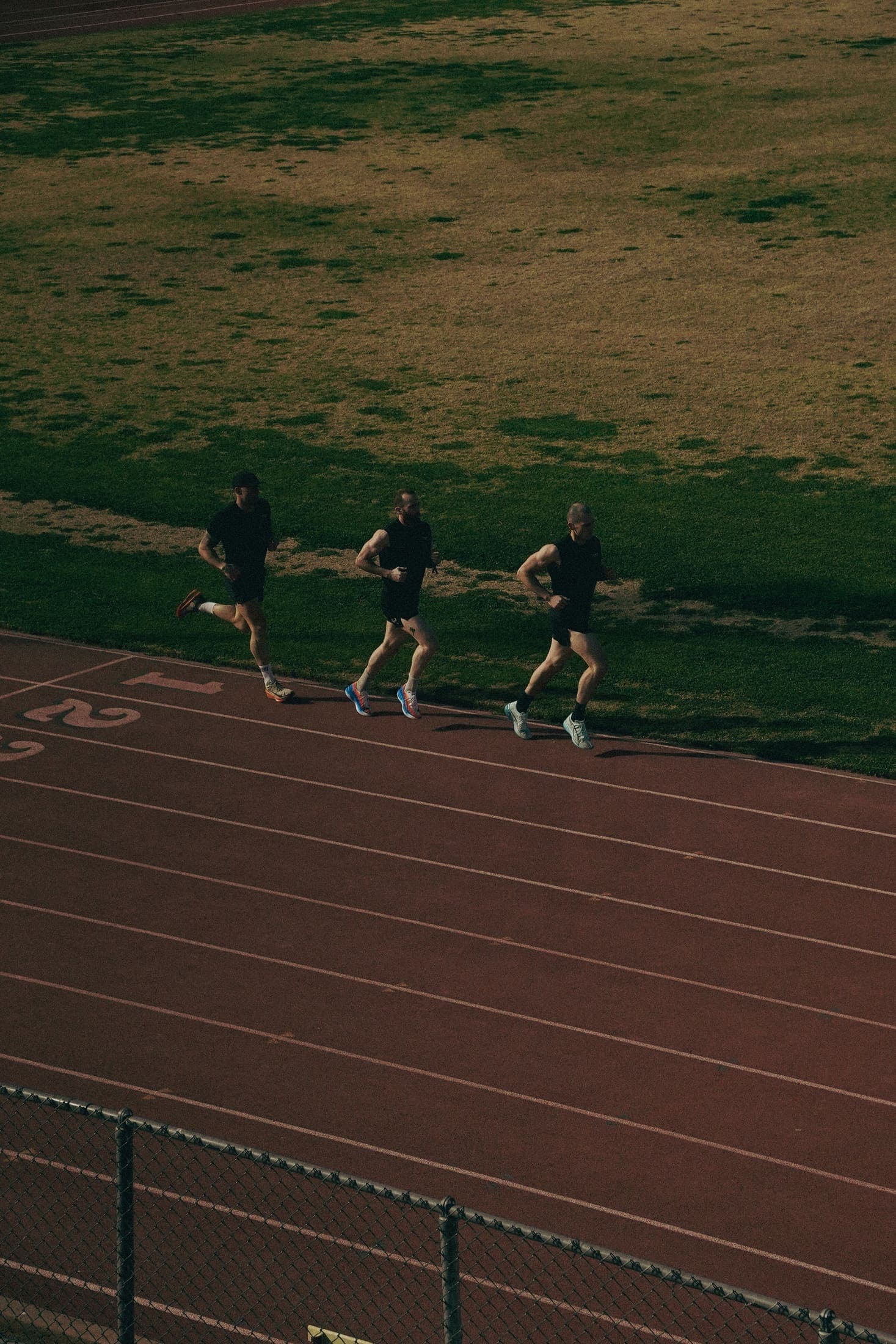
The Suth Performance programming team, led by HYROX Elite 15 athlete Ben Sutherland. They write the training, technique and race-day guides on this site, and Ben reviews every one before it is published.
[ KEEP READING ]
Related guides
Technique
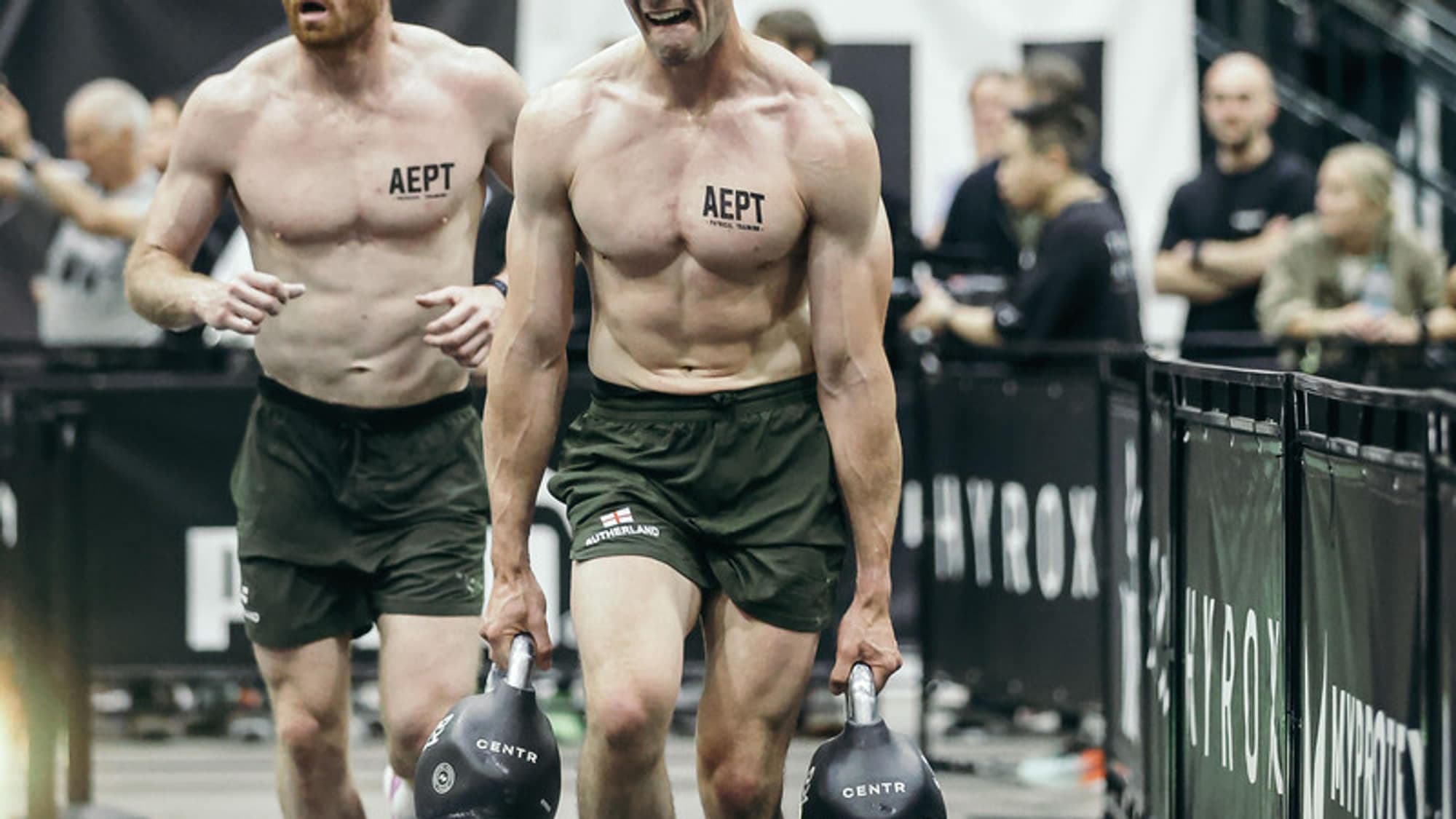
Hyrox farmers carry: grip, pacing, and the strategy that earns back 40 seconds
The farmers carry is the deceptive station. Strong athletes drop the kettlebells; smart athletes finish in 90 seconds. The technique, breathing, and pacing that turn the carry into a recovery station instead of a redline.

Technique
Ski erg for Hyrox: stroke rate, damper, and the 1-km split
The ski erg is station one. Get it wrong and you've taxed your shoulders for the next 80 minutes. The technique and pacing that protect the race.
Technique
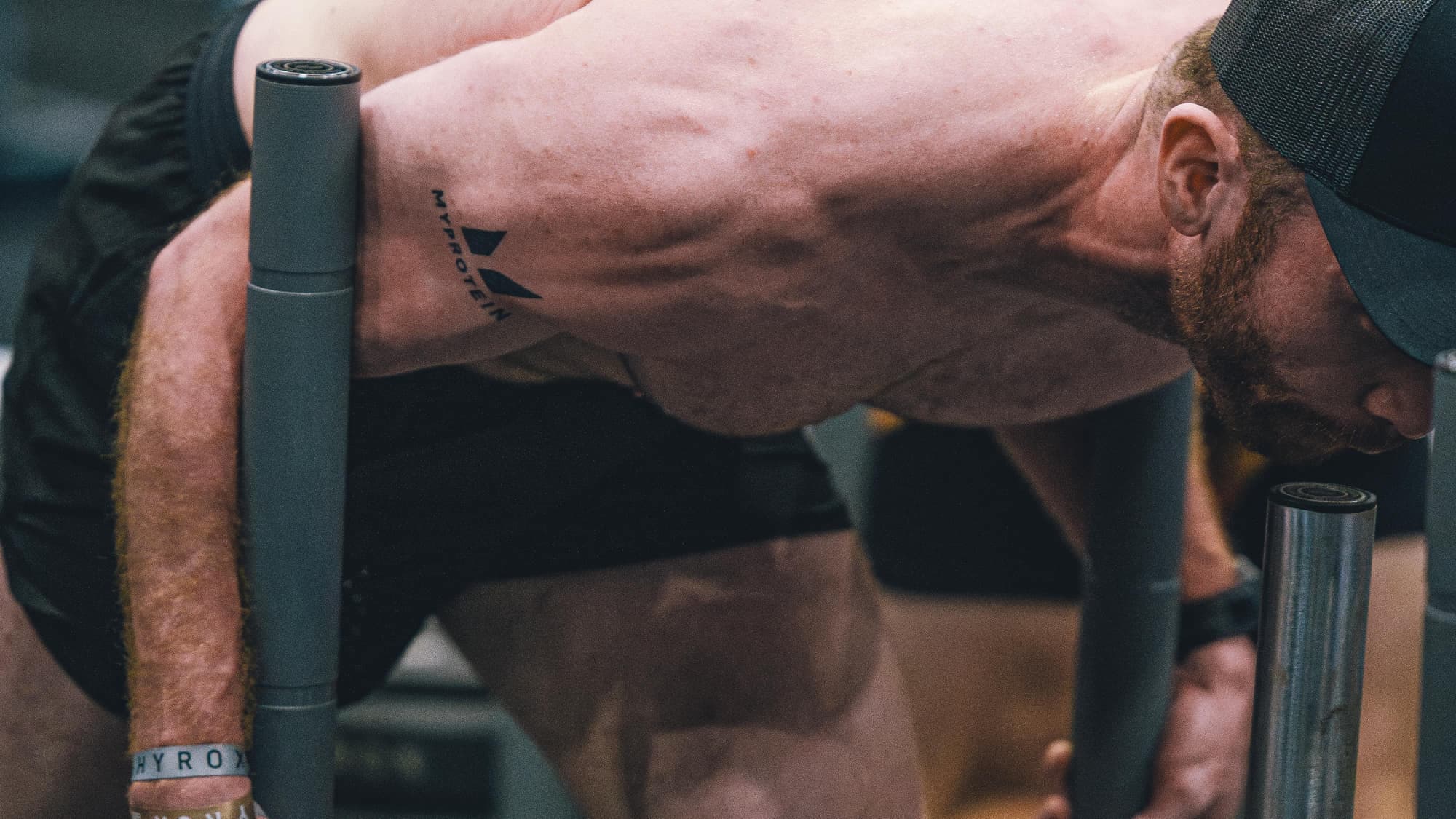
Hyrox sled push: technique, programming, and the mistakes that cost minutes
The sled push is where most first-timers lose two to four minutes. Body position, breathing, and pacing fixes that transfer to race day.