
Wall balls is the last station. By the time you reach it, you've run 7,000 metres and completed seven other stations. Your legs are jelly. Your breathing is broken. The target above you looks like the surface of the moon.
This is the station that decides how a Hyrox race feels at the finish. Done well, you cross the line with a kick. Done poorly, you stand in the lane for four minutes thinking about how to scrape together the last twenty reps.
What the station actually is
100 wall balls in every division under the 26/27 rulebook. Women's Open was 75 reps during the 25/26 season and a lot of still-live content, including an earlier version of this page, repeats that figure.
Ball weights are 4 kg for Women's Open, 6 kg for Men's Open and Women's Pro, and 9 kg for Men's Pro. Targets are 2.70 m for both women's divisions and 3.00 m for both men's. There is no age-based variation on either.
The standards a judge enforces:
- Squat depth. Hip crease must drop below the top of the knee at the bottom of every rep. No half-squats. Crouches don't count.
- Target contact. The ball must visibly hit the wall at or above the painted line. A near miss is a no rep.
- No assisting yourself. No bouncing the ball off the floor and catching it. No kneeing the ball. The catch happens with two hands, in front of your chest.
Most race-day no-reps come from squat depth, not target height. Tired legs cheat depth before they cheat height. The judge's job is to call it.
Technique fundamentals
Three habits that compound across 100 reps:
1. The squat is a squat, not a lunge. Feet shoulder-width or slightly wider, toes turned out 10-20 degrees, knees track over toes. Drop straight down, hips back and below the knee crease. Stand straight up. The vertical line of the movement is what conserves energy across high reps.
2. The throw is from the legs, not the arms. Drive up through the hip and knee extension. The ball goes up because your body produced upward force, not because your shoulders did. At the top of the stand, the ball releases naturally from where your hands held it on the chest. Throwing with the arms gasses the shoulders by rep 30.
3. Catch in the squat, not standing. Receive the ball at the chest as you drop into the next rep. Don't catch in standing and then re-squat, that's two squats per rep and a guaranteed time penalty.
The cleanest wall ball reps look almost mechanical. Down, up, ball goes, ball comes back, down again. No flourishes. No pauses.
Pacing across the reps
The 100-rep mistake first-timers make: starting unbroken, doing 30 in one go, then doing 5-2-3-2-1 for the rest because the wheels fall off.
The pattern that works for most first-timers:
[ BREAKDOWN ]
A wall ball plan you can hold
- Reps 1-20One set, controlled tempo. Do not sprint. This set decides the other eighty.
- 20
- PauseFifteen seconds. Hands on hips, two deep breaths.
- 0:15
- Reps 21-35Set of 15, then pause fifteen seconds.
- 15
- Reps 36-50Set of 15, then pause twenty seconds.
- 15
- Reps 51-65Set of 15, then pause twenty seconds. This is where depth starts slipping.
- 15
- Reps 66-80Set of 10, then a set of 5. Short breaths between.
- 10 + 5
- Reps 81-100Sets of 5 with a five-second breath. Grim, but moving.
- 4 × 5
Decide this before the race starts. A plan set while you are calm beats improvising while your legs are gone, every single time.
Compare that to the "go unbroken" attempt that ends with the athlete missing reps at minute 4 and finishing at minute 9. Splitting is faster.
How to make wall balls survivable in training
The wall ball block is unique in that you genuinely cannot replicate it without a wall, a target, and a med ball. The good news: cheap medicine balls and a measured target on any wall give you 90% of the training stimulus.
A standard wall ball session, done once a week from week 4 of a 12-week build:
Session A. Volume tolerance.
- 5 sets of 20 reps, 60 s rest between sets.
- Focus: squat depth, target consistency. No fast reps. Quality over count.
Session B. Fatigue tolerance.
- 5 × 200 m run + 20 wall balls. 1 minute rest between rounds.
- Focus: doing wall balls with elevated heart rate. Closer to race conditions.
Session C. Volume under fatigue.
- 2 km run, then 80 wall balls broken however you like.
- Focus: pacing strategy. Try different break patterns and see what feels sustainable.
Three sessions, one per week, will get a first-timer comfortable enough that race-day wall balls feel like familiar work rather than a brick wall.
Scaling for training
If 9 kg or 6 kg is too heavy for honest squat depth in training, scale down. The goal is to train the movement, not survive the weight.
A scaling progression that works:
- Phase 1 (weeks 1-3): Use a 4 kg or 6 kg ball regardless of category. Build squat capacity and target consistency. 50 reps total per session.
- Phase 2 (weeks 4-6): Move to your race weight. 80-100 reps total per session, broken into sets.
- Phase 3 (weeks 7-9): Race weight, race volume. Add the run-then-wall-ball pattern.
- Phase 4 (weeks 10-12): Maintain. Don't introduce anything new. One short, sharp session a week.
If you have a knee or hip issue, the scale isn't lower weight, it's reduced range of motion under medical guidance. Talk to a physio if anything hurts at the joint, not just the muscle.
What good looks like on the clock
For reference, by category:
| Category | Wall ball target time | | --- | --- | | Men's open, first-timer | 6-9 min | | Men's open, sub-90 finisher | 4-5 min | | Women's open, first-timer | 5-7 min | | Women's open, sub-95 finisher | 3.5-4.5 min |
If you're outside these ranges, the fix is almost always pacing and squat depth, not strength. Squat depth that's honest doesn't fade. Squat depth that started shallow at rep 5 will be caught and called by rep 40, costing you reps you have to re-do.
A race-day note on the finish
When you hit your last wall ball, rep 75 or rep 100, there's a temptation to lob the ball at the wall and stagger off the lane. Don't. The clock doesn't stop until you've crossed the finishing mat.
The pattern that works: place the ball calmly in the bin or on the floor, jog the few steps to the finish, raise both arms, and breathe. You'll have video for the rest of your life of the moment you finished your first Hyrox. Make it look composed. The pain ends as soon as you cross the line.
Most first-timers, when they look back at their wall ball block, say the same thing: "It wasn't as bad as I thought." That's because they paced it. The block becomes a series of small sets, each manageable. The hundred reps is just the sum of those sets. You can do this.
More on wall balls
- The faults that cost time on wall balls, and the rulebook standards behind them.
- Five sessions that build a faster wall balls, with benchmarks to test progress.
- The wall balls station page for the movement standard in full.
- Station order: what this station borrows, and where the bill arrives.
[ FAQ ]
Frequently asked
How many wall balls are in a Hyrox race?
100 reps in every division under the 26/27 rulebook, including women's Open, which was 75 reps in 25/26. The ball is 4 kg for Women's Open, 6 kg for Men's Open and Women's Pro, and 9 kg for Men's Pro. Targets are 2.70 m for women and 3.00 m for men, at every age.
What's the wall ball standard for a valid rep?
Squat depth must reach below parallel, the hip crease lower than the top of the knee. The ball must hit the target above the line. Misses don't count. Judges enforce both ends.
Should I do wall balls unbroken or split them up?
Almost no first-timer goes unbroken. Sets of 20-15-15-10-10-10-10-10 is a more honest target. Splitting reduces failed reps, which net out faster than ego-driven unbroken attempts that grind to a halt.

Written by
The Suth Performance teamCoaches and editors
The Suth Performance programming team, led by HYROX Elite 15 athlete Ben Sutherland. They write the training, technique and race-day guides on this site, and Ben reviews every one before it is published.
[ KEEP READING ]
Related guides

Technique
Hyrox sandbag lunges: technique, breathing, and the 4-step recovery
The sandbag lunges look easy in training and ruin athletes on race day. The technique, the rhythm, and the recovery trick that saves your wall ball legs.
Technique
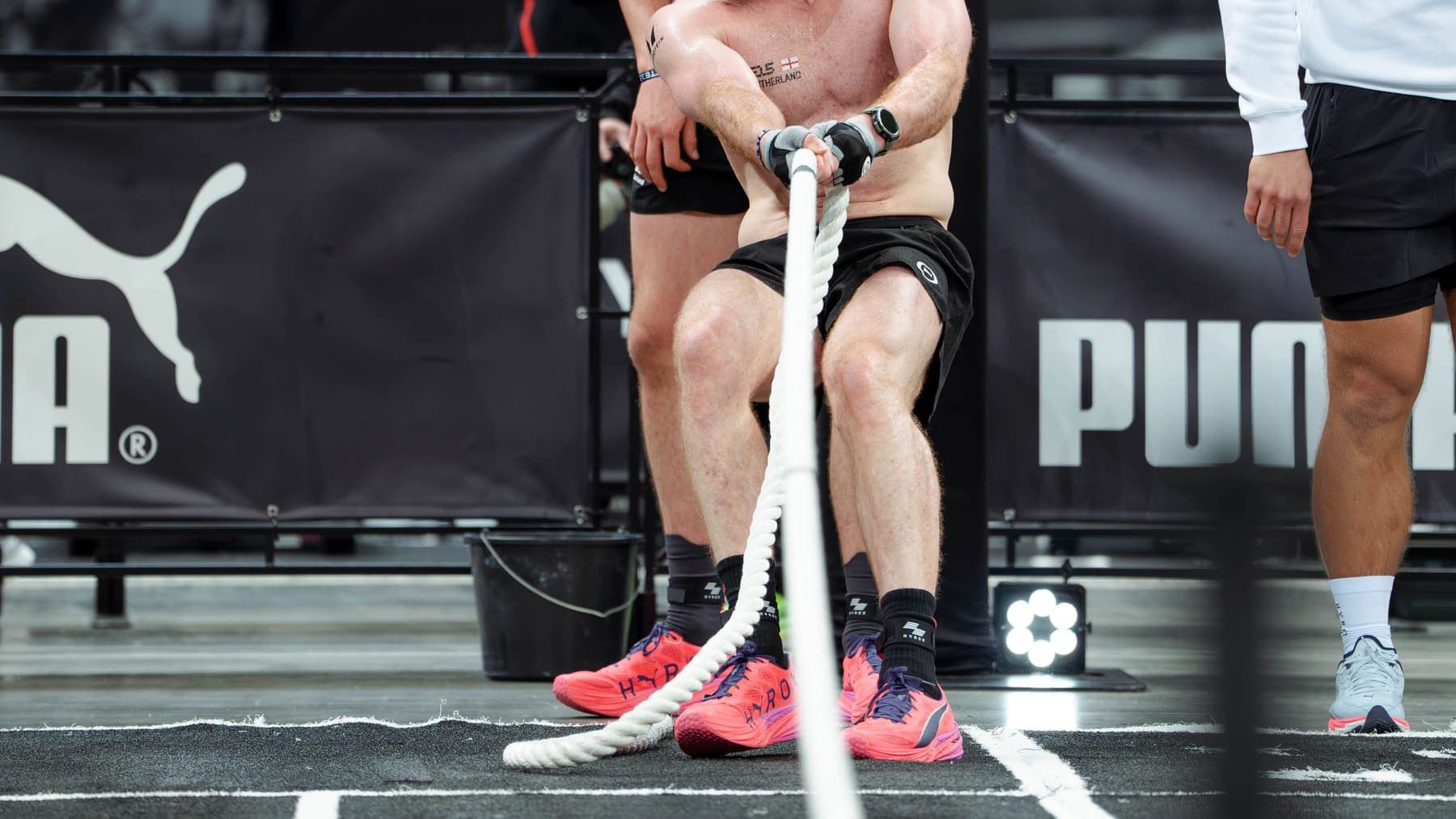
Hyrox sled pull technique: feet, hands, and the rhythm that wins
The sled pull is a station most athletes underestimate. The technique fixes that take 90 seconds off your time, in detail.
Technique
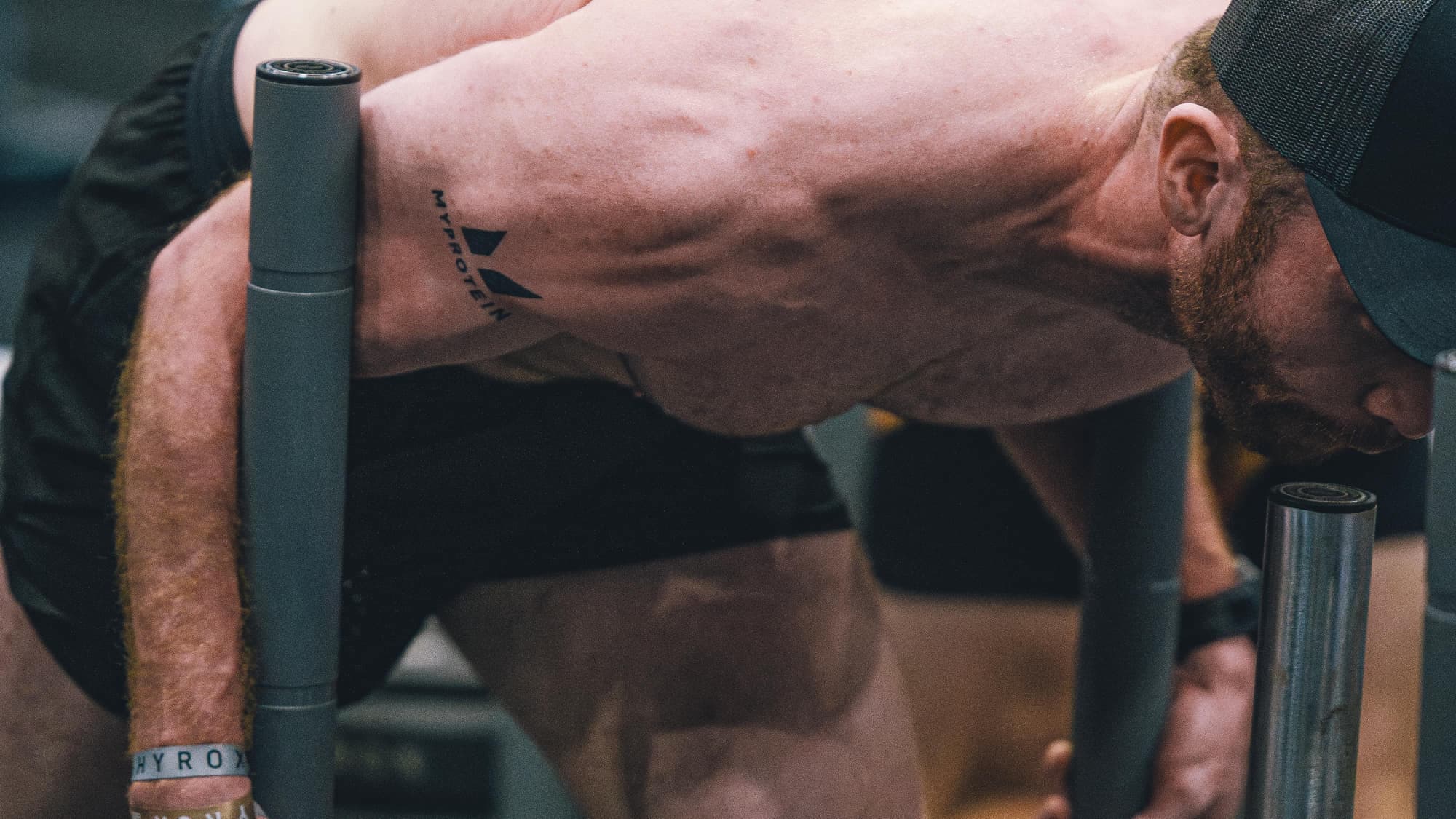
Hyrox sled push: technique, programming, and the mistakes that cost minutes
The sled push is where most first-timers lose two to four minutes. Body position, breathing, and pacing fixes that transfer to race day.