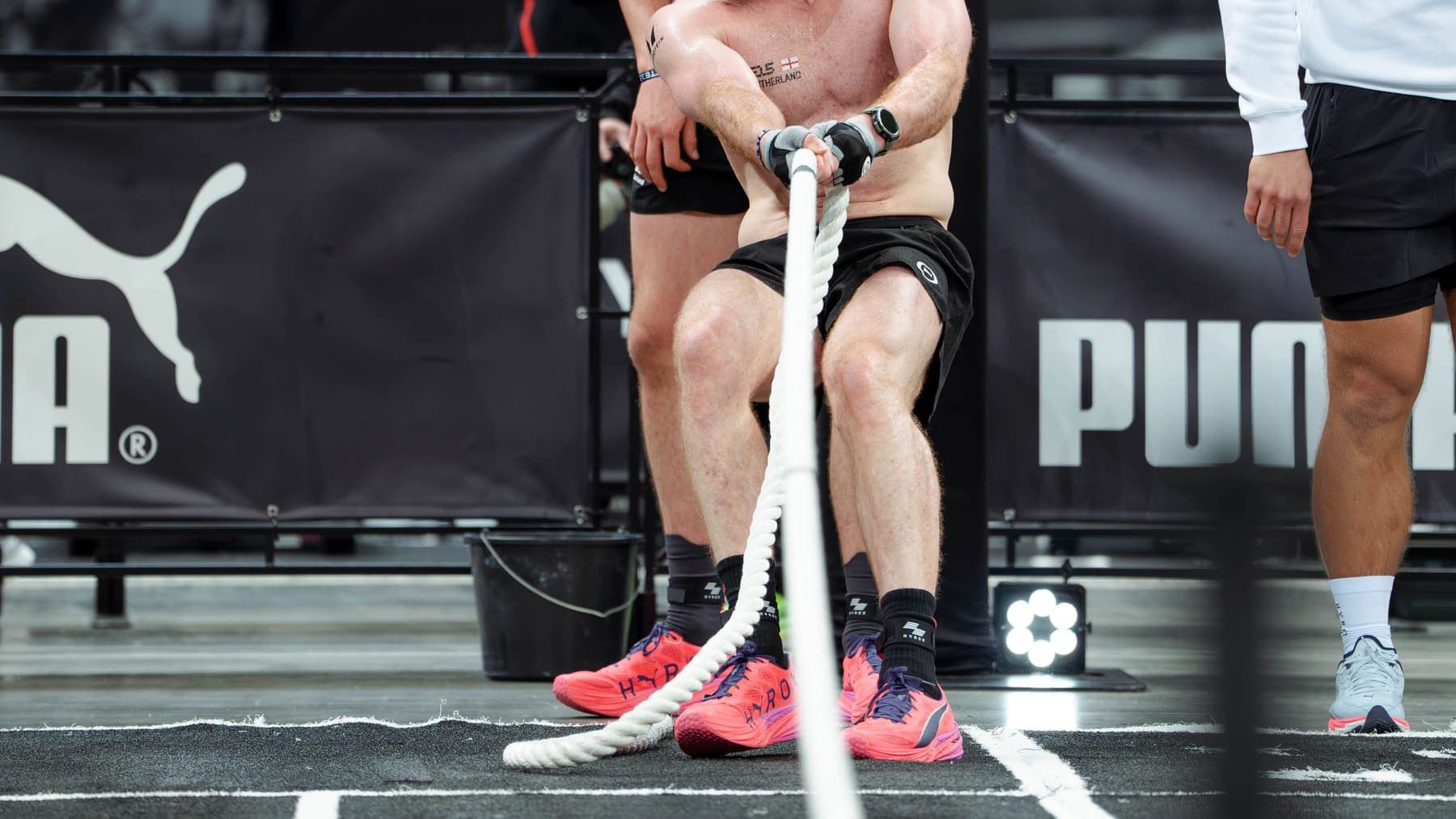
The sled pull station is the most under-prepared station in Hyrox. Athletes drill the sled push (because it scares them) and the wall ball (because it hurts), but the sled pull rarely gets dedicated weekly attention. That gap is where 60-120 seconds hides.
What the sled pull actually demands
A loaded sled, attached to a rope. You sit or stand at the back line, pull the rope hand-over-hand to draw the sled toward you across 25 metres, then repeat the other direction for another 25.
The forces involved:
- Static break. Same problem as the push: the sled has to start moving. The first pull is the hardest.
- Continuous hip and back drive. Once moving, each pull engages glutes, hamstrings, back, and grip.
- Grip endurance. Hands and forearms after 100+ pulls.
A clean sled pull takes 90 seconds to 3 minutes for most open athletes. The difference between a 90-second pull and a 2:30 pull is technique, not strength.
Foot placement: heels down, hips engaged
Three stances work. Pick one and drill it.
1. Seated (most common). Sit on your heels, hips slightly behind the line, knees splayed out. Heels stay rooted; the rope passes between your knees. Pull with arms while bracing your core and pushing the hips back into the ground.
2. Kneeling (less common, higher hip drive). One knee down, one foot forward (like a half-kneel). More hip drive available; less stable. Works for taller athletes.
3. Deep squat (rare, only for very mobile athletes). Hips below knees, heels flat. Most powerful pull position but requires hip mobility most athletes don't have.
Avoid standing during the pull. Standing means you've added a setup and break-down phase to every metre.
Hands: hand-over-hand, no breaks
The rope hand-over-hand pattern is the single biggest technique lever. The pattern:
- Both hands on the rope, one ahead of the other.
- Pull with the rear hand, drive it past the front hand, plant it.
- Now the new rear hand pulls, drives past the new front hand, plants.
- Repeat. Continuous tension. Never let go.
The common mistake: pulling with both hands together (like rowing), then releasing both, then re-gripping. This drops the sled momentarily and resets static friction. Every drop costs you 1-3 seconds.
A useful cue: imagine you're climbing a vertical rope and the sled is below you. You'd never let go of the rope. The same applies pulling horizontally.
Breathing: brace and exhale on the pull
The sled pull is anaerobic for most of the field. Two patterns:
1. Continuous brace + steady exhale. Brace the core, exhale steadily through the lips on each pull. Inhale on the return.
2. Pattern breathing. One breath per two pulls. Inhale-pull, exhale-pull, inhale-pull, exhale-pull. Works for athletes who like rhythm.
Don't hold your breath. The pull is long enough that you'll go dizzy mid-station if you do.
Pacing: 80% effort, no all-out
Like the sled push, the sled pull is station 4 (or 3 depending on the version of the race). You have 4-5 stations still to go. Pulling at maximum effort costs you wall ball and farmer's carry minutes later.
Target: a sled pull you finish breathing hard but composed, with no break in rhythm. If you stop mid-25 m to recover, you're going too hard.
A useful gauge: count your pulls per 10 seconds. If you can sustain the same count across all 50 metres, you're pacing well. If the second 25 m is 30% slower than the first, you went out too fast.
Common mistakes (in order of frequency)
| Mistake | Why it costs you | The fix | |---|---|---| | Standing between metres | The setup costs more than the pause saves | Stay low, stay seated | | Letting the rope slip | You pay for it in re-grips | One hand braced while the other reaches | | Pulling with arms only | The arms fail long before the hips would | Drive the hips back into the ground | | Going hard on the first 25m | The second 25m gets harder, not easier | Start composed | | Tangling the rope on re-set | Seconds, and rhythm | Rehearse the flip at half weight |
In order of how often they show up:
- Standing between metres. Stay low. Stay seated. The setup costs.
- Letting the rope slip. Maintain tension. One hand braced while the other reaches.
- Pulling with arms only. The pull is a posterior-chain movement. Drive your hips back into the ground.
- Going too hard on the first 25 m. The second 25 m gets harder, not easier. Start composed.
- Tangling the rope on re-set. Practice the rope flip and re-set at half weight in training. On race day it should be automatic.
Training the sled pull
Most commercial gyms don't have a sled pull setup. Workarounds:
- Rope + plate stack. Tie a rope to a cable stack, sit on the floor, hand-over-hand pull the stack toward you. Identical movement pattern.
- Resistance band + heavy anchor. Less ideal, but trains the pattern.
- Heavy KB row in long sets. Doesn't train the pattern but builds the muscle endurance.
Weekly volume in a Hyrox build: 2-4 sets of 50 m of seated rope pulls at 60-75% of race weight. Twice per week if your grip allows; once if not.
The drill that transfers most
If you can only do one sled-pull drill in your training week:
5 × 50 m at 70% of race weight, 90 seconds rest between sets.
This builds the pattern, the grip, and the pacing. Five sets is enough to develop the muscle endurance without wrecking your grip for the next session.
Race-day mental cue
A useful single thought as you approach the station: "stay seated, never drop."
Five words. Both of the rules that matter. The athletes who finish the sled pull fastest are the ones who keep tension on the rope from the first pull to the last.
The honest summary
The sled pull is the most under-trained Hyrox station. Adding two focused sessions per week for six weeks before your race will save you 60-120 seconds on race day. The technique is simple but specific: seated, heels down, continuous hand-over-hand, brace and breathe.
It's not a strength station. It's a rhythm station. Train the rhythm.
More on sled pull
- The faults that cost time on sled pull, and the rulebook standards behind them.
- Five sessions that build a faster sled pull, with benchmarks to test progress.
- The sled pull station page for the movement standard in full.
- Station order: what this station borrows, and where the bill arrives.
Next step
Grip fails at two separate stations, and almost nobody trains it deliberately. The HYROX training plans put grip work where it belongs in the week.
The fitness assessment quiz tells you whether grip is genuinely your limiter or just the bit that hurts most.
[ FAQ ]
Frequently asked
How heavy is the Hyrox sled pull?
Open men's: 103 kg. Open women's: 78 kg. Pro categories use heavier loads. The rope is fixed length and you pull the sled toward you across two 25 m lengths.
What's the format?
Sit, kneel, or stand at the back line. Pull the sled hand-over-hand using the rope until it crosses the back line. Re-set rope, pull from the other end. Total 50 metres.
Should I sit or stand to pull?
Sitting (on the heels or in a deep squat) gives the strongest hip and back drive. Most fast athletes start sitting and stand only if their hip flexors lock up. Standing wastes energy in the back-and-forth setup.
What kills sled pull times?
Rope tangles. Loose hand-over-hand. Letting go to re-grip. Not seating the heels down. Standing back up between metres. Practice the hand-over-hand pattern at half-weight before race day.
Written by
The Suth Performance teamCoaches and editors
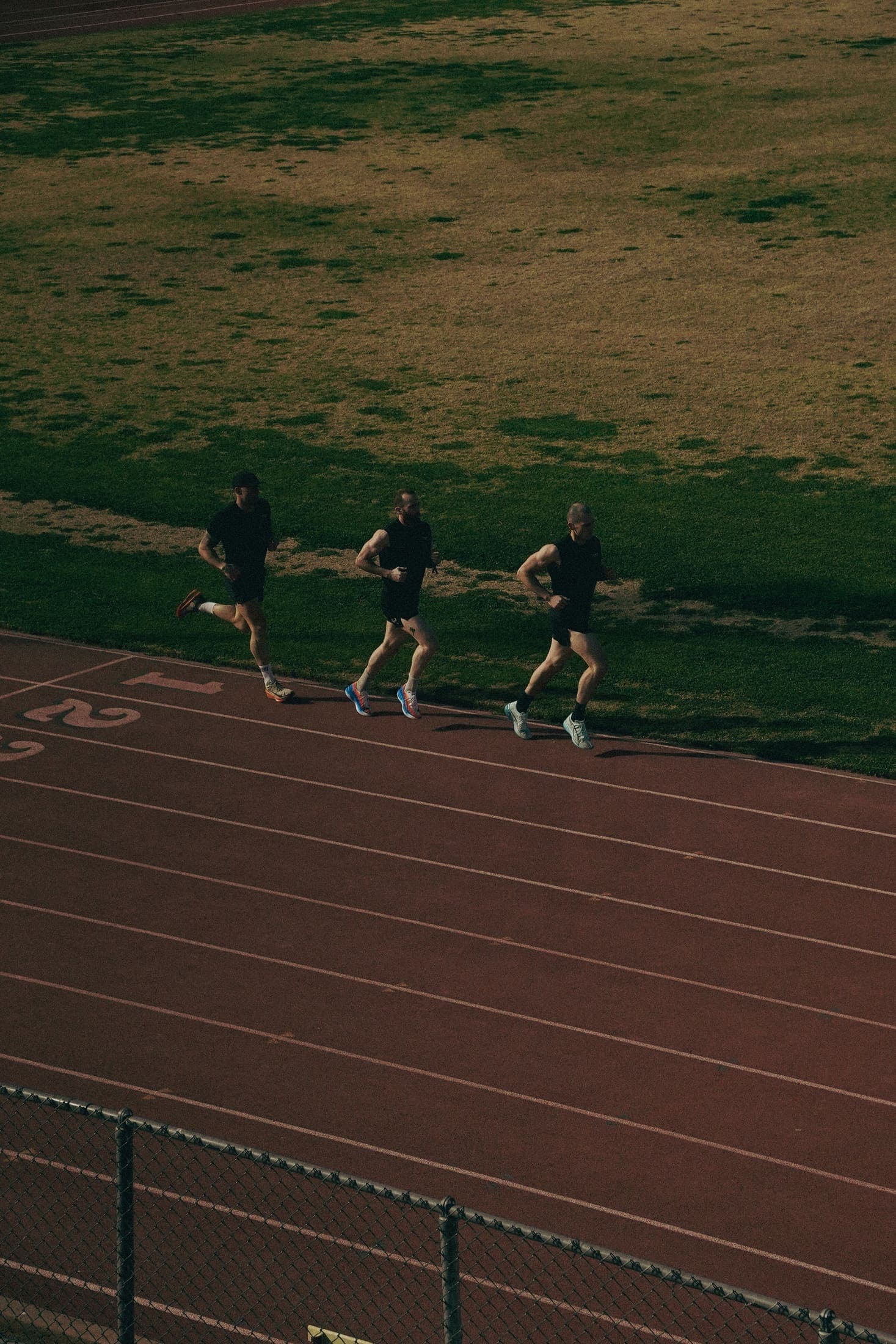
The Suth Performance programming team, led by HYROX Elite 15 athlete Ben Sutherland. They write the training, technique and race-day guides on this site, and Ben reviews every one before it is published.
[ KEEP READING ]
Related guides
Technique
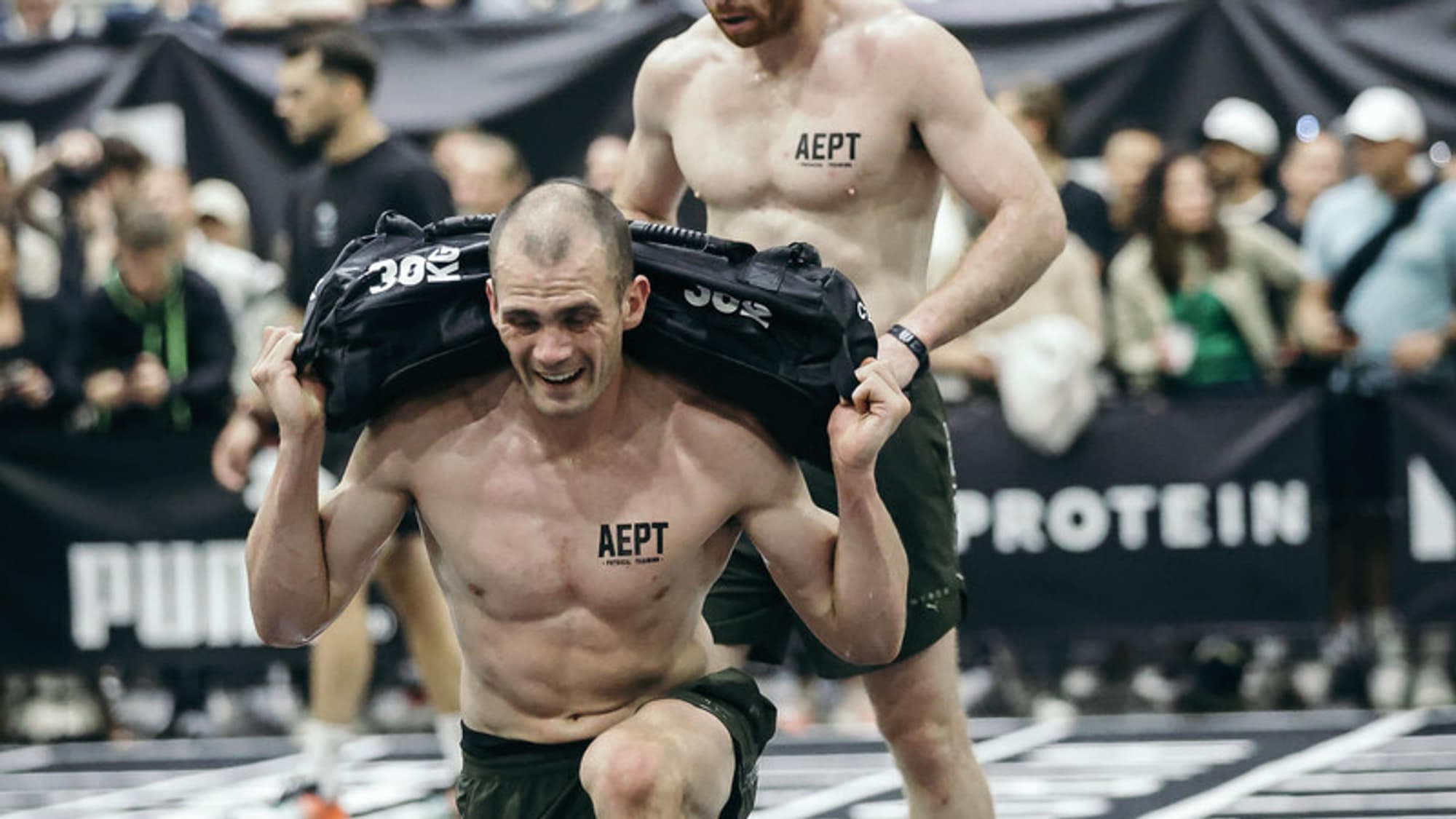
Hyrox sandbag lunges: technique, breathing, and the 4-step recovery
The sandbag lunges look easy in training and ruin athletes on race day. The technique, the rhythm, and the recovery trick that saves your wall ball legs.
Technique
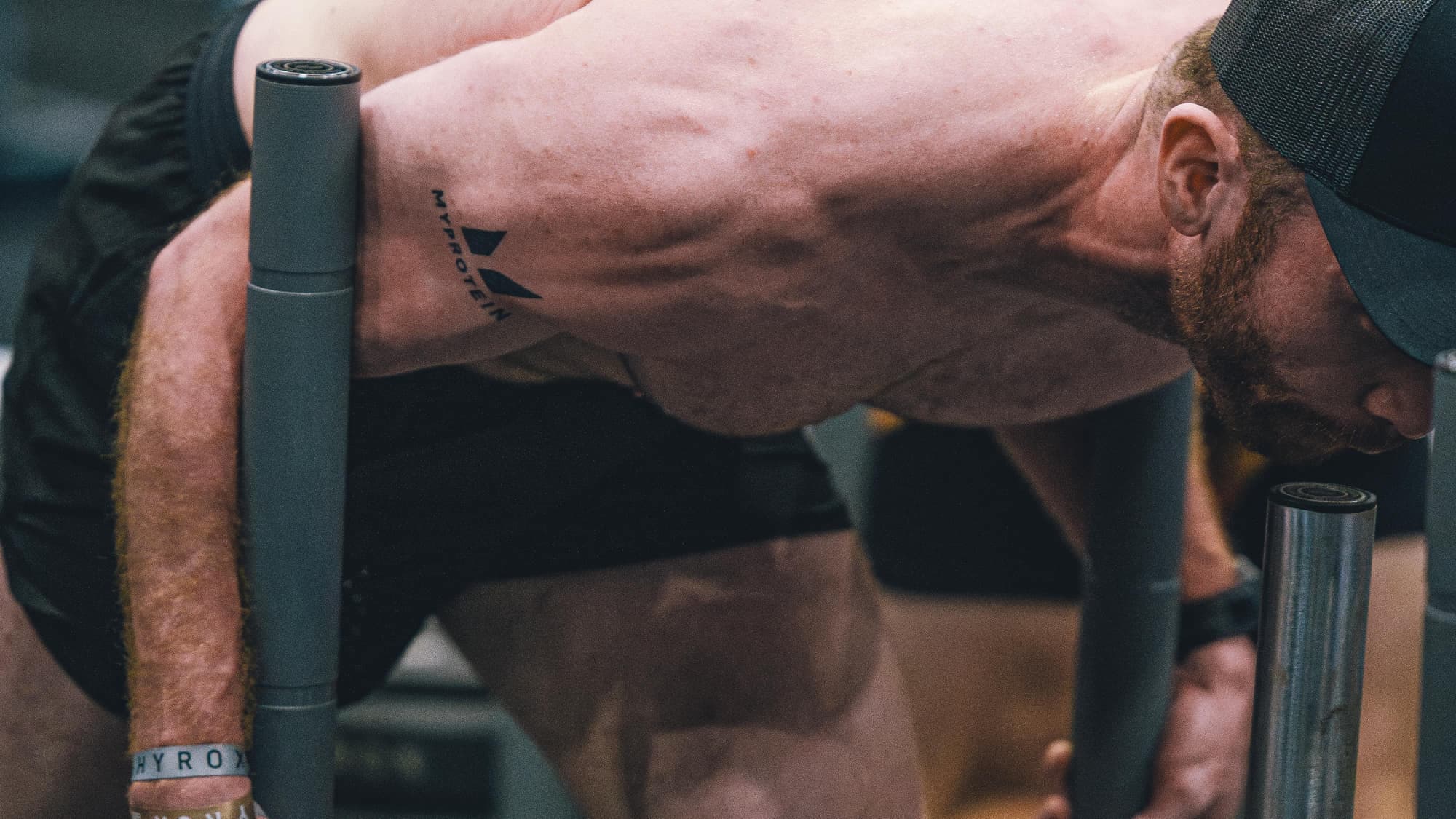
Hyrox sled push: technique, programming, and the mistakes that cost minutes
The sled push is where most first-timers lose two to four minutes. Body position, breathing, and pacing fixes that transfer to race day.
Technique
Hyrox wall balls: weight, technique, scaling, and the rep count that breaks people
The final station. 100 reps for men, 75 for women, after 7,000 metres of running and seven stations of work. How to make wall balls survivable.